The awesome inflight navigator.

There is something awesome about the inflight navigator’s map which spells out the destinations you’re flying to, around, close by, towards, away from.

They appear pop up with a determination and sense that no argument is to be had here. Bucharest will follow Berlin which will follow Amsterdam. No questions to be asked and no debate to be entered or entertained.

They make you go I wanna go there, i wanna go there, what’s happening in Vladivostok this minute? Why is it so dark on the ground outside Addis Ababa? Where are those city lights of Singapore?

The inflight navigator is a tool of genius allowing us to put places in order, faces to places, histories to events and coherence where there was none before. Even if we’re 44,000 ft above sea level.

It speaks of places emerging out of the radar, beacons flashing in bizarre unnamed and unheard of places all for the benefit of the distanced traveller who kilometres above those ground installations  imagines mysteries, delights and conflicts both real and imagined. The beacon outside Yalta may be an insignificant piece of technical installation on the ground but in the sky it speaks of wars, hot and cold, of leaders,afraid and psychotic, of saunas both welcoming and poisoned.

Thank you, inflight navigator.

You speak of the sun moving across the earth. A huge U shape marks the spots the terrain where the sun is out and people dance sing wave their hands in the air and protest; and the terrain which is in the dark and where the people hide sleep and wander around in moments of anxiety fear and terror.

Some are in the light, others are in the dark. Many are on the cusp, either entering the dark times or anticipating the impending moments of light. Many others have no idea which direction they’re moving towards and fret accordingly.

You speak too of temperatures outside our cosy cabin. 20 degrees plus on the ground but soon dropping. 10. 5. Minus 5. Minus 20. Minus 50? Is that possible? Minus 79? Theres no such temperature where we come from but there is up here. Its a place for temperatures unbeknownst to many of us. It may as well be like living in Ethiopia for all the lack of familiarity it suggests. The Ethiopia down there has its counterpart up here. There’s no escaping the hostility of the planet.

Thank you, inflight navigator.
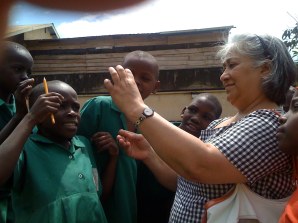
Uganda, day 3: searching for authenticity

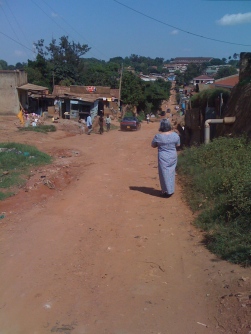
2008-06-11 13.06.14The endeavour in Kampala is very noticeable: seemingly chaotic but more a sense of heightened hustle and bustle without the tension which was in the streets and newspapers of Nairobi. White lines on the road from the airport was a good start, although the majority of them are pit-holed, roughened up and shot to pieces. You can see why you need an off roader here as the roads themselves are more off road than on road, what with the melted, rippled and solidified tarmac at their sides, the flaking away into the earth and the general chronic wear and tear.
There ain’t nothing as authentic as your memories. We are looking for authentic matoke which has to be cooked properly (a la memory) and added to the right sauce. It’s comforting that the hotel is flanked by armed guards but talk on the TV of the Sudanese seeing the interventions of the LRA as an act of war is not so comforting. This will be a week of searching for authenticity and it might end in tears.

2008-06-11 12.36.57Day 4
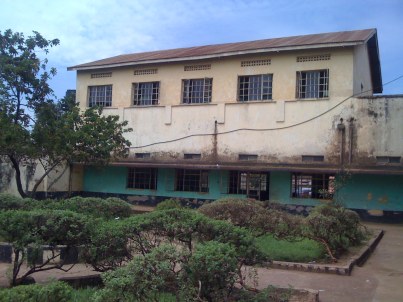
The search for authenticity continues. Distances walked from home to school once seemed huge and never ending; when older they’re seen / they see us as short as from here to the next corner. The memory has been shrunk wrapped so that the journey is now no more than couple of blocks. Likewise, the house which at once seemed so large with innumerable rooms and possibilities is now no more than a modest shack in a compound with its crumbling walls and washed public spaces in which children play with meagre resources but ample imagination.

2008-06-11 15.15.48Day 5

It’s only memory that allows for spaces, possibility and heightened sensual experience. The revisit, the return, shrink wraps and diminishes. At best the terrors of the memory are perhaps lessened, made mundane and domesticated by the revisit and the horror can metamorphose into the ridiculous and the pathetic: at worst, the revisit causes the joys of the memory to be likewise sanitised, and recast into a new perspective which holds less import, moment or potential.

2008-06-11 15.54.50Day 6
We have spent many hours wandering in and out of I remembers and walking down memory lanes, putting bits of memory together. Confusion sets in once in a while when I remember those trees turns into those trees remember me and I’m left wondering whether spaces and places miss and yearn for us as much as we miss and yearn for them. Ironically, the search for authenticity when it gets close, results in a temporary emotional choking up, a temporary amnesia which means we forget more or less everything about that memory and the drive to authenticity that that memory induced.

And we speak of memory as if it is an intact entity, boundaried and discreet: perhaps a memory is more of a composite of senses, reflections, images, sounds, tastes and smells which coalesce occasionally to produce “a memory”.

2008-06-11 12.37.19Day 7
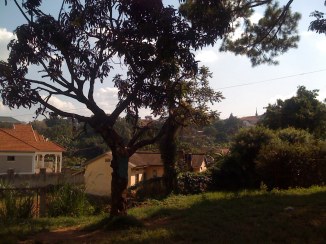
Capturing memory has been like trying to step into the same stretch of river twice. The river keeps flowing, nothing stays the same despite the appearance of the river bank, undergrowth and other assorted peripherania.

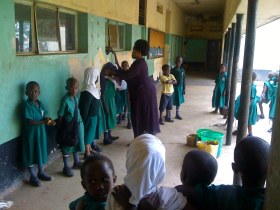
Things have flown away, the waters have traversed the ground carrying assorted flotsam and jetsam it collects, is donated or mysteriously acquires through some kind of adjacent leakage. The river keeps flowing, trying to capture and fix the memories is in vain, it’s all in vain…. as the children in the orphanage sang earlier this week.

2008-06-11 15.34.05

The knowledge of the car driver: Number 5 in an the series: Knowledge, traffic and arts based research.

The knowledge of the car driver is perhaps the most complete form of knowledge available to us in both the private and public spheres of knowledge. He (for the car driver is always male, the form has not yet found a way of accommodating female insights into how to navigate oneself around the world) knows how to use Satnav, A – Z or his own innate capabilities in recognising how the world roads systems should connect up; how to surround himself with the perfect soundtrack which mirrors how his own internal emotional turmoil connects to his public confidence in the morals of the highway code; and  how his mpg will accurately predict his eta. On a good day, the drivers knowledge is both organic and inorganic,  both evolved and constructed: man and machine are perfectly melded. On a bad day, you find yourself on the M25.

Arts based research has a particularly effective role to play if the driver finds himself on the Moebius Loop that is the modern outer city motorway. Poetry, site specific installations and bricolage can be bought into play on the car dashboard, creating new interpretations on ancient themes of mans inhumanity to man, the place of God in a Godless society and the existence of the Devil. The only risk to the driver is that by becoming so immersed in the knowledge that this research generates, they miss the turning for the Dartford Tunnel and are doomed to repeat their journey for a further 120 miles.

More travel knowledge here.

The Education revolution starts TODAY! The radicals, at last, have all the best tunes.

Whilst Pink Floyd indicated their intent to start an educational revolution in the 1980s with their rousing ‘We Don’t Need No Education” (ironically indicating to the pedants amongst us exactly why some education was needed when it came to communicating to the rest of the English speaking world – it’s ANY education, Jones – not NO education – do keep up boy!), the most recent education revolution started TODAY at the recent TEDXLondon event at London’s Roundhouse.

And like all good revolutions, the Education Revolution is being broadcast through popular song with the revolutionaries on the stage proclaiming their intent through a collection of songs which will no doubt find their way onto ITunes in time for Christmas, or at least every school’s Nativity Play.

(Go work down) On the Waterfront is an exhilarating rehash of the old Simple Minds classic: it will be a treat to see them rejuvenate themselves and bring that thumping great bass line, simplistic memorable lyrics and exhortation to bring in the ‘real world of work’ into the imaginary world of the classroom.

Let’s Make Mistakes Together will be a soulful ballad delicately performed by Will Young and a backing chorus of X-Factor rejects who have been picked up off the audition room floor by Will, given a dusting down and placed on the road to fame and fortune.

I am me because of us is a defiant anthem which Celine Dion has penned but which U2 will be treating with a newly invigorated Eno at the mixing desk and Chumbawumba offering free style rabble rousing. Expect the addition of a further guitar courtesy of Paco de Lucia and the sampled ukele of George Formby.

Emily is one of the top ten outstanding people in the world is a remake of the lost Belle and Sebastian track from the 1998 album, Boy with the Arab Strap. It wasn’t a particularly impressive number then but with Goldie at the mixing desk, things can only get better as Ken Robinson was heard to be singing over the weblink.

She made a self-sustaining fridge for West Africa has been especially commissioned from Ray Davies, formerly of The Kinks, but still showing his penchant for English whimsy. ‘Self Sustaining Fridge’ is reminiscent of his early 1960s album, Arthur, on which She Bought a Hat Like Princess Marina” was an audience favourite at the Marquee (just around the corner from the Roundhouse, funnily enough).

So although the education revolution starts TODAY and no-one’s too sure who’s leading this, who the guerillas are, where the anarchists are in the mix and where the collateral damage is going to occur, we can all at least be confident that this revolution will at least have some decent songs, downloads, tracks and other commerical spin offs.

The reassuring knowledge of the HGV driver: how schools could benefit. Number 4 in the series: Knowledge, traffic and arts based research.

There’s a lot to be certain about when you’re driving a truck. You know you’re more imposing than pretty much else on the road. You can see more, anticipate more and from the elevated position of your cab, can reflect more on the foolishness and antics of lesser road mortals. Your philosophical reach matches the miles measured on your tachograph.

You know it will take you a good half mile to stop should you decide to break: you’d be better off making an appointment with your gear box to slow down, rather than rely on acting in the instant. You know you are carrying out some vital economic, social or cultural function: moving widgets by the million or self build furniture to homes bracing themselves for the arguments that will leap out of the box the moment they slit open the cardboard with a stanley knife.

Safe in this knowledge, the HGV driver reflects many schools approach to teaching children. They know the curriculum and navigate it with confidence; they will take a long time to slow down and change direction and are secure in the belief they are undertaking vital economic tasks: training the youth of today to be the economic generators of tomorrow.

However, HGV drivers have their achilles heels too. Their inability to see very much behind them and their innate inertia means they cannot respond easily when faced with an immediate accident in front of them on the Euston Road. They can easily jack-knife and cause hours of disruption for hundreds of fellow travellers if they spill their widget load over the Queens Highway. Their security in their knowledge is fine in times of certainty and if no-one else is on the road. These days however, nothing is certain and traffic is an inevitable consequence of venturing out on the road for everyone. “Don’t blame the traffic – you are traffic” as some bright spark in the automotive industry recently wrote.

HGV drivers, like cyclists and taxi drivers, could benefit from a course in art based research: the understanding and knowledge this would generate would help them become more nimble movers, respond more effectively to the needs of other members of the traffic stream and give them a sense of humanity when it comes to carving up a motorbike on the inside lane.

More travel knowledge here.

The transgressive knowledge of the cyclist: who the f#!? do they think they are? Number 3 in an the series: Knowledge, traffic and arts based research.

Whilst the knowledge of the taxi driver is in a state of crisis, and the knowledge capacities of the bus driver under-exploited, the knowledge of the cyclist is both stable and fulfilled. Stable  in the sense that they know how to get where they want to go (ie sit on saddle and peddle like crazy) and fulfilled in that there are unlikely to be any surprise passengers on the bicycle, hiding in the pannier bags ready to spring a few narrative surprises…

The cyclist knowledge is also trangressive and reflective of some problematic identity resolutions. One minute they are a law abiding traveller on the nation’s roads, the next they have become pedestrians on wheels, oblivious to the demands made by red traffic lights or pelican crossings. This transgressive performativity (identity is not who you are, it’s what you do) may provide them with additional epidemiological insights, but it also causes wider concerns amongst fellow travellers. ‘who the f#!#do they think they are?’ being a common rhetorical question posed by car drivers, relatively ignorant of the knowledge capacities of the cyclist when witnessing their delight in swapping identities.

This is the cyclist’s dilemma.  Their transgressive capabilities, whilst providing them with new insights into contemporary travelling insights is generated at a price: existential questions of who do they fundamentally think they are.

Arts based researchers would help them resolve these questions through the suitable application of a course of graffiti, bricolage and spoke-art. The nation’s roads would become safer as a result.

More travel knowledge here.

The benefits of the bus driver, epistemiologically speaking. Number 2 in an the series: Knowledge, traffic and arts based research.

The double decker bus driver has the resources of at least 11 on board CCTV cameras on their bus.

This gives them the benefit of knowing where he or she is going. They know too, pretty much, how they’re gonna get there, how long it will take and these days, with the added value of GPS, know what the conditions are going to be like ahead of them. They will also know that in large cities especially, the traffic lights will be rigged in their favour.  They may not know however why they’re going where they’re going – but that kind of existential question is also beyond pretty much every taxi driver too so they’re both in the same boat in that respect (NB boat – not taxi or bus).

The main significant advantage of the bus drivers knowledge however is the fact that should he or she wish, they have access to upto 56 other people’s knowledge about the reasons for their journeys. This would give them a superior knowledge of the traveller and their lived experiences: adding to the ongoing epistemiological crisis of the taxi driver who these days neither knows nor cares why they’re going somewhere, how much it costs or even how to get there.

Of course, the bus driver may not have the time or skill to elicit those knowledges from their passengers. This is where arts based research can play a major role in making the bus journey a much more enriching experience for everyone. They will make living the good life, an even more likely proposition.

More travel knowledge here.

Frozen is the new fresh, horse is the new beef and I am the Count of Monte Cristo.

The MD of Unilever enthused 5 years ago to a conference of school teachers and chlldren that creativity is essential for business success. He suggested that creativity should be at all levels of the business, “not just the top”.  He referred to various examples – Virgin Airlines  (apparently an airline which makes you feel special every time you travel on it), Top Shop  (“many of you go to top shop and can now buy high fashion at affordable prices” and the café chain Patisserie Valerie (which makes you feel like you’re in France allegedly).

He said that Unilever needs to recruit people who think differently, people who can work with you, not for you, and leaders at all levels of the organisation whose task was to ‘clarify what was wanted, be a voice from the front, encourage risk taking and awaken peoples passion.’  An example of what he meant by passion followed on film –  a 5 minute advert for Findus foods which was to indicate how his employees were having their passion awakened by the generation of new products and ideas: frozen vegetables.

He finished his sequence with questions from the conference panel: ‘are schools doing enough to generate creative ideas for business’ and ‘how could you make sprouts more appealing to children?’  His final comment, in some joking aside about the issue of school dinners… ‘our frozen food is fresher than fresh food… Frozen is the New Fresh’: now makes a lot more sense 5 years later with the recent horse meat scandal.

Now we know that ‘creativity’ is often an excuse for all sorts of linguistic shenanigens and that teachers at conferences on creativity and education often have to swallow a lot of frogs when it comes to assessing what is ‘good practice’.  But in the era when  Frozen can be the New Fresh and Horse can be the New Beef then I can clearly become the Count of Monte Cristo.

The porkie pies that Findus have been unashamedly peddling for years are at least out in the open although you might reasonably wonder whether there is something else other than pork in those pies.  Over-enthusiastic marketing is built upon a lot more than reconstituted delusional seaweed.

Poetry on the Serbian Hoof

Some great stories and poems from young Serbian creatives here:

Error
This video doesn’t exist