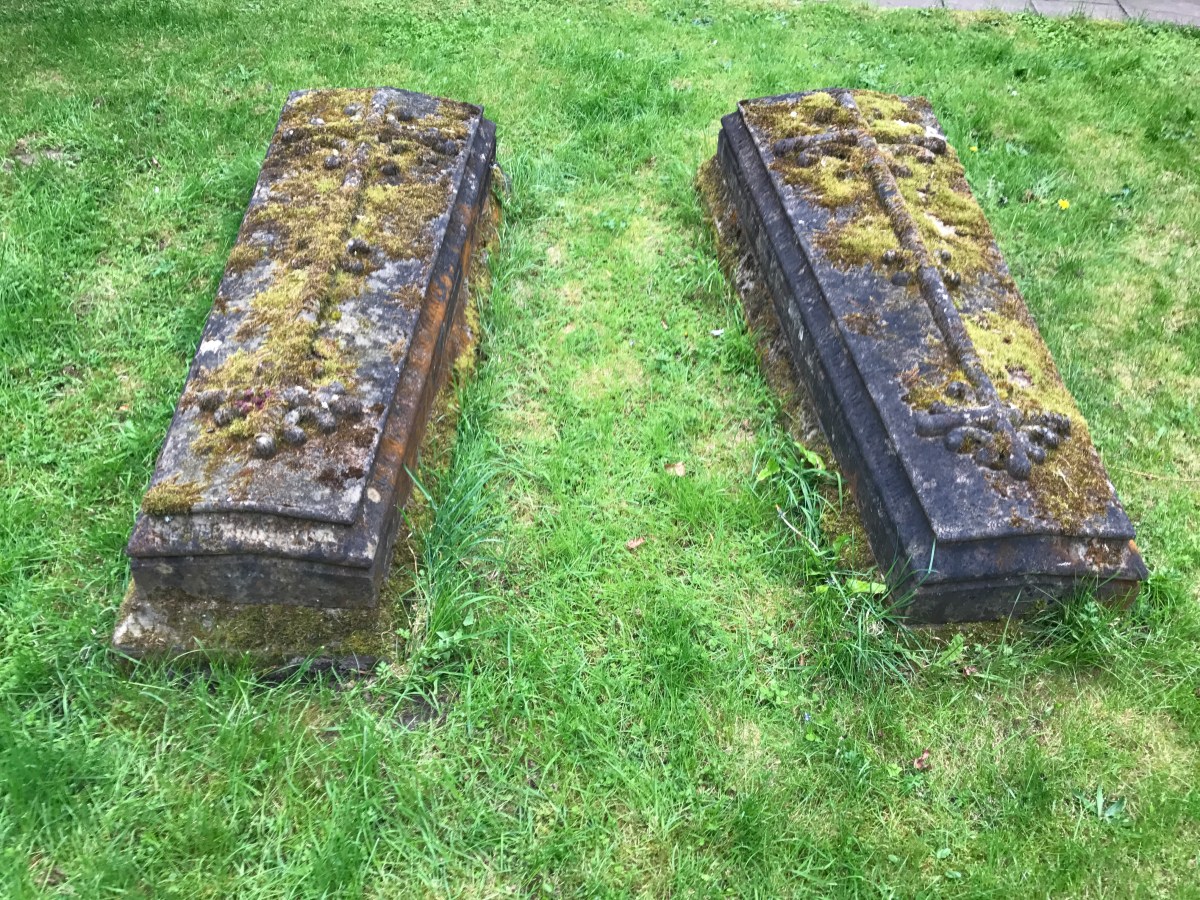
Tips for Business Start Ups: 3 blindingly obvious things about the arts business: ideas, experiences and immortality.

What do you actually do, many people ask of Aspire. Do you provide products or services? Services or products? What do you sell? someone asked insistently this week when we were part of a trade mission to Skopje in Macedonia.

After some spinning around of the options – tickets? consultancies? projects? It occurred to me that we do all and none of things. No, what we sell are ideas. As simple and complex as that: ideas.

And we sell them to audiences, participants, staff, funders, project holders and stakeholders, past present and future. it’s not even as something as structured and regulated as knowledge or know-how although that’s part of the picture. No, It’s ideas. Widgets we are not.

The difficulty in selling ideas is that they’re difficult to demonstrate to people and say, there you are, there’s an idea. Would you like to buy it? We have neither have catalogues nor a website which advertises stuff we can sell on in a clear unambiguous way. An idea may as frequently be present on the back of a fag packet as it is in a business plan. Many of the better ones don’t even make it onto the fag packet.

Annoyingly for the accountants amongst us, ideas cannot be pinned down, measured or assessed with much confidence about their economic viability. Ideas are a bit like thought bubbles which lead to further thoughts, which lead to actions which lead to consequences –some beneficial and worthwhile, others unexpected and unwelcome.

We may –and do –produce many things over a year – but given the nature of the arts, these are frequently ephemeral, may just last for a few minutes or hours and may have taken many weeks or months of preparation for that big moment of arts production – when whoof! Its all gone in the flash of an eye, the curtain has come down, the houselights gone up and you’re left looking at a bare stage going, is that all there is?

The notion of arts as service is equally unreliable. Good arts activities will lead to personal experiences which are memorable, transferrable and irreversible. Once you participate in a workshop for example, you may not like it – but you can’t un-do the experience and you can’t take it back to the retailer complaining that you don’t like the colour, that it doesn’t fit or that you were given it by mistake by your grand-aunt. An arts workshop is for life, not just for Christmas. It’s a service you don’t always know what you’re going to be getting from it.

So, the products fade quickly and cost a small fortune to put together; the services may be modest and last for a few hours on a wet Tuesday afternoon in a school in Ellesmere Port.

But what they alll have in common is that the ideas that drives this economy lead to fundamental and vital experiences – learning, fun, play, entertainment, reflection, friendship, connection, love, humour and bewonderment.

Oh, and perhaps even immortality on a good day: a big claim for any business, to be sure, but one which ranks up there with the best of all human aspirational activity.

A Waiting Story: Little Red Riding Hood in the Macedonian Forest

In the time before Red Riding Hood got betrayed by a Wolf in Grandma’s clothing, the young girl would quiz her elderly relative about her habits and whereabouts. Some would say that this was the cause of her early demise but others dispute this telling of the fable.

Why do you cook toffee apples granny? Why is your house made of gingerbread? Why do you go walking in a forest? Is it for the peace and quiet?
Hardly, dear, you can hear trains and cars and city bustle. A call to prayers from a nearby mosque sounds like a wolf weeping but that’s no reason to walk in the forest.

Is it for the Fresh air and invigorating atmosphere?
Upto a point my dear: until the logging trucks drive by and the fumes wash over as you sit by the roadside, slightly blackened from the sooty deposits. So that’s no reason to walk in the forest.

Is it for exercise and maintaining a healthy body?
That may be fine dear, as long as you haven’t got knees which give you grief and buckle every step of the way. That’s no reason to walk in the forest.

Do you commune with nature, then? asked Little riding Hood impatiently. Or perhaps even yourself?

If you stood still long enough, it might be possible to commune with anything, but to walk in the forest you have to keep on walking: stumbling cursing sweating breathing so much, there’s not a lot of communing to be done. That’s no reason to walk in the forest.

Is it to get around the next corner then? asked Little Red Riding Hood sarcastically.

Ah, smiled her elderley relative, that is an answer. There’s always another next corner, another bend to get around, a hillock to navigate, there’s just another view to catch before you turn around and do the same journey but in reverse order.

So that’s why you go for a walk in the forest, Granny? she asked with a faux impression of relief.

Yes, my dear, that’s the reason to walk in the forest: to retrace your steps. I walk in the forest in order to go around in circles.

And enough of the prying questions! True to her word, Little Red Riding Hood’s grandmother – who had her own genetic stock of impatience – stepped back, sprung the latch from the pantry and out leapt a huge brown wolf, scantily dressed in grandma’s clothing who proceeded to devour her then and there, lock stock and barrel. And that, dear reader, was the end of Little Red Riding Hood and her inquisitive questions.

Lest we forget: dear departed arts and culture organisations who won’t be remembered in despatches (unless we remind people)

As the recession continues its grip on arts companies, small businesses and sole traders up and down the country, its noticeable that many of them are slowly disappearing without a murmur. We don’t think that’s a fitting way to say farewell to those many organisations who have contributed to our national cultural health – whether they’ve been around for 1, 10 or 50 years.

If you’d like to commemorate any arts organisation’s demise, please let us know here and we’ll compile a list of unfortunate souls who didn’t make out of the credit crunch, recession or economic downturn or whatever it’s called today. We’ll make a list which we’ll send onto the relevant organisations (local authorities, arts funders, charities and so on) to put them in the picture of who we’ve lost. If you can add details of a website, numbers of jobs lost, matched funding opportunities missed – and other useful, public quantitative data – that would be great too.

In memoriam:

A-Foundation, Liverpool

Activ8 Success, Birkenhead

Aspire Trust and Aspire Creative Enterprises

Audiences Central

Brewery Theatre, Taunton.

Contemporary Urban Centre (CUC), Liverpool

Durham City Art

The Cholmondeleys and the Featherstonehaughs

Flambard Press

Foursight Theatre Company

Jazz Action

Lanternhouse, Cumbria

Matthew Street Festival *gone but not forgotten, even though some of us would love to forget it and all it stood for”

Pacific Road Arts Centre, Birkenhead

Pele Productions

Quicksilver Theatre, London. Lost the funding after 34 successful years.

7 Sefton Libraries

Theatre Writing Partnership

Urban Strawberry Lunch

Wolstenholme Creative Space

Whilst other organisations are not yet extinct, the combination of funding cuts at national and local levels is putting them under immense strain. Many organisations have seen massive staff cut backs or remaining staff giving their time for free in order to save the long term health of the company. Their efforts should not go un-noticed.

More at: http://www.bbc.co.uk/news/entertainment-arts-17536195

What constitutes an Olympian Educator?

In June 2012, we’ll be celebrating the concept of the ‘Olympian Educator’ with educators from across the world in a unique conference on London’s South Bank. As well as meeting diverse speakers and colleagues and sharing pedagogies, ideas and approaches from across the world, delegates will be able to visit London schools and meet – through the magic of the internet and the performing arts – ancient educators such as Socrates, Dewey, Piaget, Vygotsky and Montessori.

But by Olympian, we don’t just mean schools with the highest visibility or schools with the highest performing pupils – but schools in which the efforts, talents and skills of the staff are making a real –Olympic – difference to local children’s and families lives.

So, to get the ball rolling, we’d like to know: what does being an Olympic Educator mean to you? Is it something in their training? Their performance? Their relationships with their students? Their pedagogy? The Olympic Educators Conference has kicked off now and will be a further 4 months in the making.

For further information or for the chance to be involved please see

https://drnicko.wordpress.com/wp-admin/post.php?post=735&action=edit

or contact me at nowen.aspire@btconnect.com

The Tuesday Rant: how the arts sector is being shafted by parts of the public sector who should know better.

Dear local authority,

It has come to our attention that you are increasingly awarding tenders for arts projects to universities whose turnover is a zillion times higher than the value of that tender.

Do you not realise that you are undermining the sector you claim to represent?

Dear university, why do you insist on putting students on public projects which effectively takes the bread out of local artists mouths? Do you not realise you are shooting the local arts economy in the head every time you place an unqualified graduate into an arts project?  Would you accept student doctors diagnosing your children’s health if they’d done just one year in medical school?

Dear local authority, why are you complicit with this act under the guise of getting ‘value of for money?’ Old mill owners got value for money by exploiting their workers to within an inch of their lives.  Why are you contributing to this outdated industrial practice? And more importantly, why are you allowed to keep getting away with it?

Maybe you’ll appreciate our case once all your arts workers have lost their jobs because of your funding cuts and come back to the sector to look for work… Only to find there is a skeleton of a sector left because it’s been shafted by universities who place unqualified students on projects which should be run by qualified local professionals. And offer access to their so called ‘premium spaces’ in order to claw back some of the massive capital deficit they’ve built up in ‘investing’ in the local economy. 

Dear local authority, dear university, please don’t coming looking to the sector to dig you out of a cultural desert in a few years time. The responsibility for that emptiness will be yours and the students who have long flown the city.

The Thursday Dialectics: convincing the unconvinceable.

The Thursday Dialectics are a series of posts which aim to look at both sides of an argument in a frivolous yet serious, meaningful and meaningless, significant but throwaway kind of style.

They’re for the days when you can’t make up your mind, when the act of decision making is a step too far and anything that resembles committing yourself to a position, idea or action fills you with horror.

The Thursday Dialectics are for those of you who doubt, steadily remain unconvinced and enjoy sitting on fences. May you never fall off them!

Recent Thursday Dialectics include:

https://drnicko.wordpress.com/2011/10/27/whats-the-big-deal-about-sustainability/

Or, on the other hand:

https://drnicko.wordpress.com/2011/10/27/reincarnation-is-the-way-forward-new-approaches-to-business-planning/

Give Us This Day: a Toast to Reincarnation.

At a recent education conference, our presenter talked about the value of the green curriculum, stressing its importance in Eco-viability, sustainability and all good things in general.  Ironically sponsored by Pepsi Cola, she added that as we only had one life we best make the best of it, that we only had one life on this planet and that it was our moral duty to be good guardians of it.

In an important nod to her audience however she also recognised that there was more than one way of looking at our lives on the planet: “to those of you who believe in reincarnation” she finished, “ the greening of the curriculum is not so much about saving the planet now, but making it a better place for you when you return”.

Reincarnation is a particularly handy idea to deal with common sense notions that we only have one life; that life is not a dress rehearsal; that death is a foregone conclusion and like taxes, we best face up to the giant tax collector in the sky and pay what’s due on time, with no argument and with good grace. Reincarnation allows us to plan for the second, third, fourth and who knows how many times around, hopefully securing a better deal on the next visit unless we have been particularly obnoxious on this occasion.

Planning for reincarnation would be a useful addition to funding applications as it would be a tacit acknowledgement that our cultural efforts are always flawed, no matter how many business plans we write. A box which asks us how we intend to produce the production, deliver the curriculum or save the world when we are reincarnated either a) as a lizard or b) as a superhero would make writing and reading funding applications a lot more of an entertaining process for everyone.

My Lords, Ladies, Gentlemen and Members of the Jury, please raise a toast to Reincarnation.

Give Us This Day Our Daily Toast: read all about toasting here.

What’s the big deal about sustainability?

In much public life, the idea that ones efforts – whether artistic or educational or economic – should be sustainable is a highly persuasive piece of rhetoric. If your work is any good, the argument goes, and if you want money for it, then you must have a sustainability plan. You must want to see it existing over and beyond the short time of its current life time. If you can’t argue that it’s sustainable, there is an almost automatic burocratic frown placed against the merits of the project. It can’t be that good, they say, if it can’t be sustained. If there’s no more of the same, then what is the point of the project in the first place?

But why? Our lives are unsustainable. Like it or not, our death partners will call for us all one day. No-ones going to be left out of that particular public project. Our lives are the essence of unsustainability so why do we expect it of the artefacts we make, the dreams that we dream ?

Death and decay is much a part of creativity as its more user-friendly sister, birth and generation. Perhaps we should plan for project ending, closure and fading away in the public sector as much as we argue for sustainability, legacy and immortality.  It would at least make for much shorter funding applications and mean that the short time we have on this planet has one less burocratic task attached to it.

The TESCO model of cultural development: partnering up on an unlevel cultural playing fields

Many public sector organisations working in the cultural sector like to present themselves not only as funders but also as partners. The notion of quite what they mean by partnership varies wildly. Clearly, they have every right to be concerned and interested in how public funding is used – but this has always been the case with any public sector funder in the past. The difference with these funder-partners is not only that they are concerned that the funding is used appropriately, but they also see themselves as having a hand in the messy business of production and delivery.

Not content with planning regional strategy and building cultural infrastructure (whatever that is – no amount of centralised planning is going to make the cultural sector resemble the national highways or sewage system), they have been busy redesigning themselves as quasi-production companies; and given the resources they have access to, are quite capable of blowing any other production company out of the water at the mere nod of a local apparatchik.

Whether or not those funder-partners have any skill in production or delivery of those projects is not the point. Their muscling into the day to day activities of specialised organisations whose life blood depends on cultural production distorts the sector so much that any longer term sustainability of those organisations becomes even more of a guessing game than it usually is.

This would be less problematic if those quasi production companies managed to reinvest their skills and resources into the wider ecology and if their protestations of partnership were driven by the five principles of partnership working.

But the frequent fact is that they’re not: they’re driven by the energies of ego, personal glorification and political arrogance. All the qualities that made Tesco the force it has become; and as they say, Every Little Helps (their own bank balance, survivability and cultural domination).