Tips for Travellers: Green’s Mill, Sneinton, Nottingham

Green’s Windmill in Sneinton Nottingham has all the appearance of being an irascible monument. It’s being refurbished at the moment and apparently some builders got injured in the process so they too are now undergoing some kind of physical refurbishment to their own bodies and souls.

You can’t help but wonder, if the windmill had a mind of its own, would it have taken kindly to being crawled over by scaffolders intent on acts of refurbishment? Perhaps it would have preferred to have been allowed to gently fade away and its brick work continue to crumble? Perhaps the need for the refurbishers to be undergoing their own refurbishment is the mark of a monument irritated by its place in the world?

Fortunately though for the casual tourist and local resident, the windmill’s desire to deny its role in the world has been thwarted by a local group of enthusiasts, skilled experts and Nottingham Council. The restoration and refurbishment which has been going on for many years now imaginatively draws you into what it would have meant to be living off the land with nothing but a sharp north-easterly to grind your wheat into the finest organic flour.

The windmill can’t help but be interesting, whatever attempts it might surreptitiously make to present itself as unworthy of the visitor. Whilst it might want to resemble the battleship windmills of Holland, or the industrial machinery of Don Quixote legends, flailing at imagined heroes and mobsters, its more modest role to serve the local people of Nottinghamshire with the provision of flour, ground out by its heavy stones, cogs and gears means that its role is assured in the heart of the community and wider city.

It’s a place to visit which nurtures the soul by providing the very physical stuff of life. I for one am glad that it’s being nurtured for a longer life, despite its irascibility.

Tips for teachers: It depends how you count ’em.

“It depends how you count ’em…” has been a constant refrain through the cultural education exchange visit in Finland this week. Whether it’s golf courses in Espoo (7 or 8), municipalities in Helsinki (4 or 14) or lakes in Finland (187,888 plus or minus), it all depends on how you count them. For phenomena you might think are pretty unequivocal (when is a golf course not a golf course?), it turns out that there is a lot more to a thing than meets the eye.

Walking along the coast line of the Tooivo Kuulas park this morning you can see why. One moment the lake looks like an impressively large pond; the next it stretches way off into the distance and it conjures up memories of Balaton Lake in Hungary; and soon enough you find out that it’s not a lake at all but just another link in the supply chain to the Baltic Sea.

It struck me that the same case could be said for student attainment. How can a country’s education system said to be performing well? Through its ratings on the PISA scale? Numbers of students who graduate into work on completion of their undergraduate study? Aggregated ratings on a mental health scale of well being? Like the lakes in Finland, it depends on how you count them. My top PISA rating may be nothing more than a drop in your Baltic Sea when it comes to evaluating the relevance those ratings have on students lives.

Whilst it’s temporarily startling that Espoo has a disputed number of golf courses in its territory, it is comforting to think that if we can’t count golf courses with confidence, we can confidently be a little less confident about the value of numbers when it comes to understanding the effects of cultural education on our children.

Tips for Travellers: the first time I ever…

… walked along the new platform which connects the Nottingham tram to the railway station was the moment I realised that there are new things we could be doing and seeing every day. Not as a form of magnificent gesture, or in a transformative life changing impactful kind of way but in a small, momentary insignificant kind of way which might generate bigger changes somewhere up the butterfly cause and effect food chain of chaos and unpredictability.

The Walk along the platform opened up some small, momentary insights into how the trains entered and left the station, how St Mary’s Church is profiled against the broader sky scape and how impressive the new bridge is that supports the new tram tracks which point to a new future of travel down south, giving more passengers the opportunity for new views of the city and its byways and highways.

Are our days any better for the microscopic experience of new viewing and walking moments? I think they are if they mean we can see life from a marginally different position. We don’t have to walk a mile in someone else’s shoes – just a few steps in our own in a different direction to get a different view on how our lives might be different.

Tips for Travellers: Waverley Hotel, Workington

Hot spots, cold spots and soft spots.

What many hotel managements don’t get these days is that along with the 17 different types of eggs you can choose for your breakfast, what the travelling business person or giraffe needs from a hotel is a functioning, reliable, uncontested and free wifi as part of the package. It’s no longer good enough to pretend to have a network in your hotel if all you can see is the room next door and no access to the wider world, known these days dear hotelier, as The Internet.

For those hoteliers who are unaware of this amazing invention, the Internet is the phenomenon a lot of people rely on to get on with their daily jobs of earning a living, socialising, catching up with the news and pretty much everything else the lone traveller is inclined to need. These days, dear hotelier, a connection to the Internet is as vital as running water in the shower. And that means water running at the right temperature out of the right tap. We don’t mind too much those rooms whose mattresses have clearly supported heavier bodies in earlier days or whistling showers or those that rhythmically clunk their way into action, as long as there is finally action which you can rely on for the time it takes you to complete your ablutions. Much the same can be said of the need for the functioning wifi connection.

These days, dear hotelier, a functioning wifi is an essential, not a nice-to-have. The Waverley Hotel in Workington would be a sweet spot of restful accommodation and business functionality were it not for the constant searching for the hotspots of wifi connection, functioning bathroom taps and mattresses that don’t throw up their springs in horror every time you have to adjust your sleeping position.

The staff are cheery, friendly and helpful; the breakfast plentiful and fresh; the bedroom spacious enough and perfectly adequate for the odd night’s stay. But if, dear Hotelier, you want to welcome visitors for a second, third or fourth time, you need to invest in this hotel by stabilising its hot spots, doing away with its cold spots and radically overhauling its soft spots.

Tips for Travellers: Panna Kitchen and Canteen, Liverpool

Dreaming of musical reunions at the dreamy PANNA café.

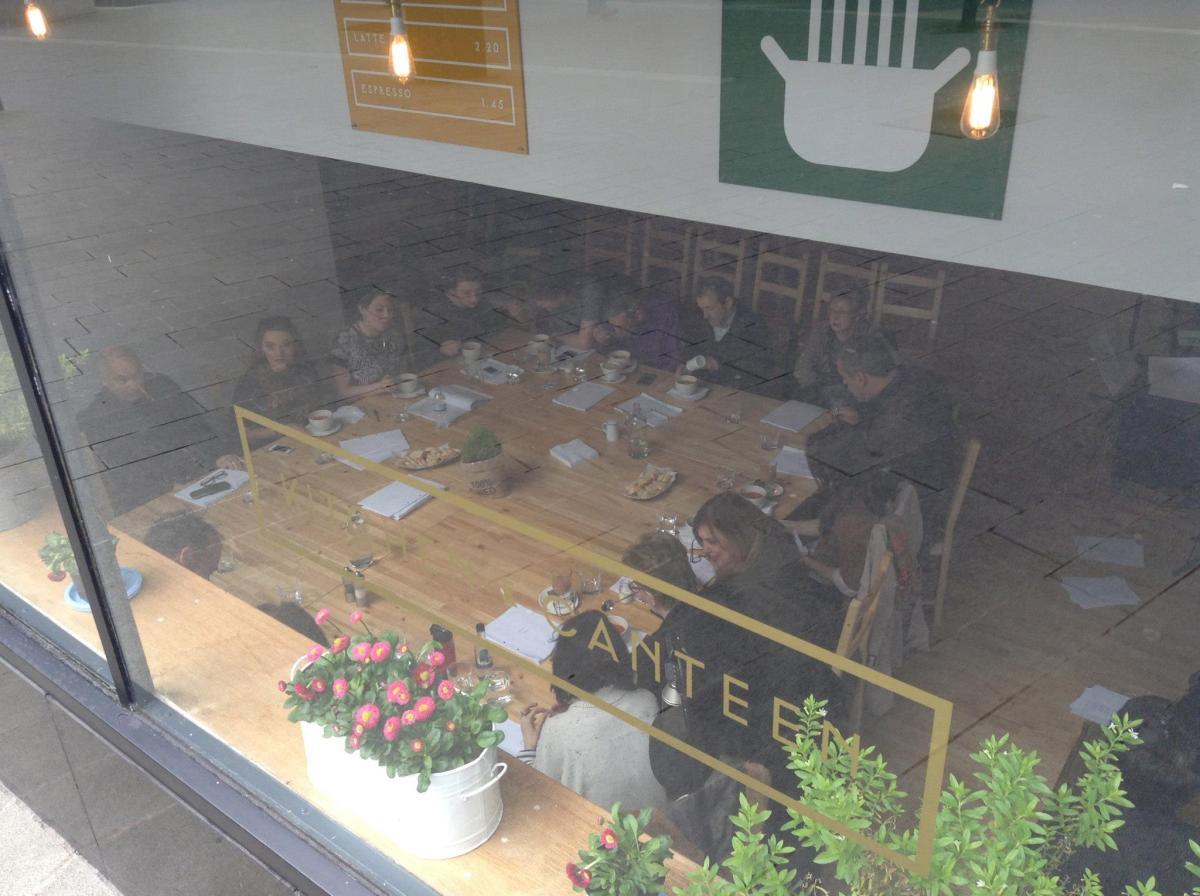
PANNA Kitchen and Canteen is a chic café on Tithebarn Street in Liverpool. The kind of place where you might meet aspirational, visionary and sparky musicians of the future, it was setup by Slovakian business partners Peter and Ivana, and offers a refreshing relief to the myriad of chain coffee shops which populate the Liverpool commercial district. It was a new business start just a couple of years ago so it’s a real joy to see how a business which was just a business plan then has come to fruition.

The food is fresh, based on artisanal baguettes and salads, continental pastries and a unique in-house coffee blend which doesn’t leave you feeling wired after a couple of cups. The continental feel is tangible everywhere you look or sit – from the cool graphics, to the furniture to the whitewashed walls – you could be in Berlin, Bratislava or Vienna.

It’s crying out for a pop in lunch visit by by David Bowie, Brian Eno and Robert Fripp – 3 of the UK’s most influential musicians and artists. They haven’t collaborated properly together since Bowie’c iconic Heroes album in the late 70s (and I don’t count Lodger as it wasn’t a brilliant album) so that dream lunchtime date would be bound to rekindle their experimental and pioneering spirit in the best European tradition. PANNA would be a perfect venue for that rekindling, especially over their coffee and continental pastries.

Tips for Travellers: The Seacote Hotel, St Bees.

The Hotel that DIY Enthusiasts have been crying out for.

Cumbria affords the tourist a multitude of seldom seen pleasures. Whether it’s landscapes and seascapes, birds and butterflies, or trains and wind turbines it’s impossible for the visitor not go ‘wow’ at least three times a day.

These feats of genetic and human engineering bring a particular type of visitor to the county’s shores: the enthusiast. It’s impossible to spend a day out and about without tripping over a sweaty couple in the sand dunes who are stalking the lesser spotted horny rimmed owl, or overhearing earnest young women discussing the consequences of the recent disruption on the line between Rowrah and Cleator Moor due to a misplaced 40566 travelling in the wrong direction.

Enthusiasts from all over the world travel to delight upon the treasures of Cumbria and need a hotel which reflects their enthusiasms and the Seacote Hotel in St Bees near Whitehaven is such a hotel.

The Seacote caters for a particular type of enthusiast: the DIY Enthusiast. They have left no stone unturned, no unmade bed made up and no fixture permanently fitted to ensure that the DIY enthusiast who finds themselves on holiday, perhaps pining for a wobbly wardrobe to stabilise or a dripping tap to stop, has plenty to delight themselves with. Simultaneously allowing the DIY enthusiast to both rest from and fiddle with some unfinished DIY, the Seacote provides the perfect work life balance for those of us whose idea of heaven resembles spending the weekends wandering the aisles of B and Q in search of that holy grail, the missing whatsit which will fix the thingamy to the doodah.

The hotel’s policy of enthusiast encouragement is evident in every nook and cranny of the hotel and the management team have been enthusiastically thoughtful in catering for the range of every DIY obsession.

If you want an iron and ironing board, you go and collect it yourself from reception. If you want a functioning iron that doesn’t leak all over your suit, you fix it yourself and hope you’ve remembered the correct colour coding for the wires in the plug before you switch it back on.

Crockery is left uncleared away in the bar, encouraging you to tidy up after someone else; bath fittings are left incomplete, encouraging you to pick up a nearby screwdriver to tighten up those loose screws on the bathroom mirror; exit signs on the doors are left half attached, allowing you to finish off the attachment with aplomb, confident that you have added to future visitors’ enjoyment of the Seacote experience; the TVs are placed so awkwardly on the walls, you’re encouraged to pick up a hammer and relocate the TV yourself in the nearest waste paper basket.

So if you’re a DIY enthusiast, the Seacote Hotel is just for you. Just watch you don’t trip over the twitchers wrestling their way along the seashore on your way in.

When you land somewhere new, you have no history.

Or so you think.

You hear the words but can’t understand the sentences. The maps are intriguing but meaningless. The streets have names but no personality. There’s no hypertext in the environment: which means no links, no back story, no memories to reminisce about.

Or so you think.

When you’re new, you understand the importance of roots. You understand root systems in a way you didn’t until you’re plucked – or you pluck yourself – out of. Unrooted and ignorant, you understand, when you’re new, the significance of old.

Or so you think.

After a short time, you establish habits, you converse, you invent names for flowers in your back yard, and before you know it you have fledgling roots. Uncertain, tentative and unassuming but roots nevertheless. After a short time, you sit in a bar and you say to yourself: ‘I remember when…’ You meet someone and say ‘how was it when…?’ And at that moment you realise you now have history. You have previous.

Or so you think.

You realise that you had previous in this new place well before you physically arrived here. The new was part of your old but you didn’t hear it. The new was a shadow in your old, silent, sometimes shyly whispering, almost embarrassed to make itself known to you but also knowing one day that it would knock on your front door and say: ‘Hello. I’m your new. Remember me?’

And then you realise that your history is not the stuff of memories, but the incidental and accidental. The stuff of meaninglessness. You see the value of recognising the words but not understanding the sentences.

Guest Blog for Creative Nottingham: Getting under their skin: portraits of Hockley, St Anns and Sneinton by Mik Godley.

Like many other immigrants over the decades, my first move into Nottingham was to move into Sneinton. It’s a compact neighbourhood and it wasn’t long before I was exploring the Polish delicatessens, the Asian supermarkets and the perpetually open corner shop which sold “everything you could ever want at any time”: apart from the very thing you wanted at midnight on a Monday.

My early weeks in Sneinton reminded me of earlier times in Harehills in Leeds, Toxteth in Liverpool and numerous boroughs across London: thriving, lively communities which whilst they were culturally and economically far apart from the centre of their host city were perhaps better placed to describe how the host community claims to tolerate diversity and endeavours to encourage community cohesion.

So, I was intrigued this week to visit the “Portrait of Hockley, St Anns and Sneinton” exhibition at City Arts in Hockley, presented by the Nottingham based artist Mik Godley: a painter, lecturer who works out of Primary Studios in Lenton.

Unknown-1The exhibition aims to show the vibrancy and diversity of the three neighbourhoods and is made up of work that was originally created for Nottingham Light Night 2015. Mik visited groups, communities and landmarks in those communities and produced over 50 images of local people and landscapes. You can see details about it on the BBC East Midlands programme here.

Mik uses the iPad application ‘Brushes’ for this exhibition which, if you’ve never seen it at work before, is an intriguing experience. You use the app much like an artist would paint: you use the touch screen as your canvas and your fingers to choose colours, brush sizes and textures to suit your purpose. The app captures every brush stroke you make in real time and allows you to play it back: with the effect that rather than looking at a static portrait, you see a portrait being composed and constructed as you watch.

You can see an example of how it works here.

The exhibition is consequently both a video and photographic experience as Mik has printed off several of the portraits to accompany the screens which show the portraits in motion.

I wondered whether his vision would compare with mine, or if there might be some significant differences in how we experienced the community anUnknownd its people. I found myself asking was whether the technology added anything to the interpretation or whether it got in the way. Mik had stated previously that he “.. really enjoyed meeting all the different sitters. It gave me a fascinating insight into their varied and interesting lives. I hope that the exhibition captures this.”

So I wanted to see if the exhibition captured the interesting lives he saw in front of his i-Pad. You can see how it played out in the gallery here: 

The answers to these questions became quite complex as time wore on. Initially, I just concentrated on the still images which were presented around the gallery and I found myself doubting whether these portraits told me anything new about the neighbourhood I had recently moved to. I didn’t feel that I had learnt anything new about the streets I walk down daily or the people whose shops I visit or share the bus to work with. But I found myself wondering whether this mattered. Does art have to give you new insights all the time or is it enough to have people’s daily experiences affirmed by the work of the artist? Perhaps it’s enough that the subjects of the paintings felt honoured to be painted by the artist and for their images to be exhibited in a public gallery?

But as I shifted from looking at the portraits to watching their play back, I realized that the video experience enabled me to look at the portraits in a more engaged manner. The change of lines, tones and contrasts as the faces developed were like micro-films of the people who were sitting for Mik. You could imagine stories of journeys travelled, family discord, weddings, of resistance, of drudgery, of wealth and poverty, of darkness and lightness of being: a whole range of stories were opened up by the ability to see the portrait under construction rather than being presented as a fait accompli. I realized that the still image is all too often an image which does exactly that – it stills its subject, fixes it and doesn’t allow for their growth and development.

I also wondered how much control the artist has over that technology buried deep in the heart of the I-pad. The algorithms do their job very well but it seems to me that all too often they allow for clichés to accrue. They dictate how the images are viewed in a tightly predefined and regulated ways: the presence of that maddening Ken Burns zoom effect which finished every portrait playback is a classic case in point.

The challenge for Mik and artists who use this technology is to not only get under the skins of their human subjects, but to get under the skin of their technologies too and make sure it becomes more of a servant to them, rather than their master.

Portrait of Hockley, St Anns and Sneinton will be exhibited in City Arts’ window from the 1st to the 17th of April.

You can download the Brushes app from all good app retailers but you won’t find it in the corner shop that claims to sell you everything at all hours. Especially on Mondays at Midnight.

Further details of City Arts here.

And more details of the Creative Nottingham Website are here.

Guest Blog for Creative Nottingham: Urban magic on your doorstep.

It’s a Friday lunchtime in the office and the weekend beckons, despite the temperatures not shifting much beyond minus 73 degrees C. An email pings through the letter box and your first impulse is to press the delete button as fast as you can to prevent you from being drawn into another circular route of endless hyperlinks, cross references and doubling back on yourself.

But this time you don’t delete it but read it. Why? I don’t know but that may not be the right question right now. It’s about a venture called Street Wisdom who describe themselves as a “new, non-profit venture that offers an enjoyable, powerful and free way of using the streets to learn something new. “ That sounds intriguing.

“There is no charge” the email continues. Even better methinks.

At Street Wisdom you don’t pay fees, you pay attention.” OK. I think I can just about manage that on a Friday afternoon.

“All you need is to turn up with a question you’d like some fresh answers to. It could be a business-related question, a personal one. Or both.” OK… now hang on, there are enough questions racing around my head at the moment to fill a race track, I wouldn’t know which one to back to getting the fastest answer.

“Come by yourself, tell your friends to sign up or even enrol your whole team – this is a great way for business colleagues to hit the refresh button.” Well, being one who always like to hit the refresh button (most frequently in the Cross Keys in the Lace Market, it has to be said) I decide to take the plunge and join the venture and their promise of Street Wisdom on the steps at the front of Nottingham’s town hall in the Old Market Square.

Pretty soon afterwards, we’ve met one of their Street Leaders who registers me up for the process and we join a group of four other intrepid searchers for the street wisdom.

They’re as good as their word: all you need to bring with you is a question that you’d like some fresh answers to. You can keep it secret if you want, but it’s good to have something in mind. Nothing as big as ‘when am I going to win the Lottery?’ or as small as ‘left or right lion?’ – but something that matters to you, right here, right now.

So what happens next? That’s not a bad question. Our Street Leaders got us started by helping us ‘tune into’ the street over four shorts walks: each walk we could make alone or with friends, and each walk had an instruction to guide you:

“Look for what you’re drawn to”
“Slow right down.”
“Notice the patterns.”
“See the beauty in everything.”

Now, in the cold light of day after the venture, this might seem a particularly uninspiring set of tasks to undertake: but in the increasingly warm light of the Nottingham afternoon, the walks and the focus given by the instructions generated for all of us on the walks a quite astounding set of responses.

I found myself being drawn to the fountains on the other side of the square, feeling quite wistful about the lack of water features in the city and the distance we were from the coastline.

The instruction to Slow Right Down had me stopped dead still in my tracks for over fifteen minutes which enabled me to see how fast everyone rushes around the city: always with intent and a job to do or a place to go or a person to visit. Staying much longer under this instruction would have seen me draining away through the concrete, I was relaxing that rapidly.

It was on the third walk – Notice the Patterns – that I really started to feel the effects of the process. Normally I brush off patterns or pay no attention to them at all: but given 10 minutes just to look at them made me hugely aware of just how patterned and ordered our city scape is: it was intoxicating to see patterns in every nook and cranny and in every small piece of iron railing, shop window and bus stop. Had this been after a Friday evening at the Cross Keys, one might have explained this with 15 pints of IPA: but no, this was Friday lunchtime and I was still technically at work.

The fourth walk – See the Beauty in everything – was the peak of the afternoon. It meant that it was impossible to go anywhere with stopping to marvel at everything. I found myself marvelling at all of modern technology when I overheard a couple of tourists extol loudly the wonder that was Skype, which had allowed them to talk to a long lost aunt in Australia that very morning.

After the four short walks, you’re encouraged to go off on a journey by yourself: your own street quest.   You do this with your own question at the back of your mind and later on meet up with the rest of the group to share your experiences and improved wisdom. I can’t tell you whether the question I had posed was answered other than to say that your first question may not be the right question; but I can tell you that all six of us were swept away by the experience and promised to go divining for more Nottingham in the weeks to come.

“It’s urban magic on your doorstep” says the email and for once in your life, the reality lives up to the promise.

More on Street Wisdom here.

And more on Creative Nottingham here.