Coming Closer to Home: after the communism…

I’ve often wondered whether EU funded adult education projects are not just about their alleged subject matter – but much more about sharing languages across our difficult and contentious continent.

A few years ago July we participated in an EU funded programme, Forests for All. As well as taking a day trip around the Mersey Forest (starting at Wirral Waters where there were no forests at all and ending up in Delamere Forest where there was plenty to look up to), many participants also massively improved their language skills, testified to best perhaps by the teacher, Alina, from Romania.

We asked her to write a short story in her own words about her experiences on the project and this is what she wrote.

This is not just a story. It is a part of my life. In high school I’ve studied the Russian language for 4 years. Our country back then was dominated by the communism and Ceausescu forced the students from most of the schools to study this language instead of English.

After the communism, the English language appeared everywhere: on TV, on the radio, in the cinema… I was fascinated by this new sound and I learned it all by myself from movies and especially from music.

For 20 years, I have never spoken English, never! I was able to understand it, but I haven’t had the courage to actually say a word. I tried to learn it from books, but I never passed the second lesson; I preferred to learn it only from what I heard.

In this project, in October 2011, it was the first time when I spoke English in public. I can’t explain where my courage came from. For me and mostly for my Romanian colleagues, it was a big surprise, one of the biggest of my life.

You, all my partners from this project, you didn’t laugh, you have encouraged me. I know I make a lot of mistakes, my accent is wrong, but you never stopped me and this means a lot to me.

Thank you for your patience, for listening to me; I’ve learned a lot from you and each one of you is important to me perhaps only for a word or for a joke or for a new expression. You’ve been my English teachers, the best I could have had.

When Nick asked me to write this story, I was terrified! I don’t know if it’s correct, but it is my real story, a story from the bottom of my heart and it could be the story of any Romanian girl who found from nowhere the trust in her own forces and mind.

There’s more of these stories to hear about in the months coming up to the UK Brexit referendum.  Please feel free to share them here.

Coming Closer to Home: The EU ‘Jolly’.

“It’s like you’ve got to get to know each other at 60mph!” Monica wryly observed as we all piled into a minibus at midnight at Vilnius Airport. We were truly a motley crew: Brits, Portuguese, Greeks all gathering for an EU funded Adult Learning Project in the Creative Arts with a couple of stray Estonian old farm ladies who looked like they’d taken the wrong bus in Tallinn and now had found themselves in an international minibus which was tentatively negotiating the ice and the slush out of the airport.

But Monica was right: by the time the minibus had driven us out of the airport and towards our destination in what felt like Outer Mongolia ( even if it was Inner Lithuania), we had all become best mates ever, swapping stories of family, football, long kept secrets we never thought we would ever tell anyone, and remarking on how beautiful Lithuania looked in the black of night when the conversation showed signs of flagging.

EU mobilities – which is what we were all examples of on that icy Vilnius night, albeit semi-comatose examples – are strange phenomena. You fly hundreds of miles, get driven to some town miles from any international airport at the wrong time of day; arrive in a hotel after the bar has shut and all the local restaurants have closed for the foreseeable future; check into a room which hasn’t been occupied in the foreseeable past; struggle to find any broadband connection and only then realise you’ve forgotten your international plug adapter. So you settle back for 20 minutes of Eastern European TV before the bling and razzamatazz of Polish sausage adverts starts to get tiresome.

You observe at 3am after two hours of no sleep that you were, in the parlance of those back in the office, ‘on a jolly’ so you may as well try and damn well jolly yourself up before the first formal session starts just after the crack of dawn (which is some 7 hours away given that we are in the northern most reaches of the northern hemisphere at this point in time).

‘Being on a jolly‘ according to those back in the office consists of dry martinis in the hotel bar at 6pm before a luxurious 3 course dinner with erudite, witty, charming, intelligent, attractive and sophisticated colleagues who were fascinated in you, fascinating to be with and whose fascinators never stopped fascinating all week long, come rain or hail, sleet or snow. In actual fact you’d be lucky to find a kindred spirit who was equally unfascinated by the porridge the hotel would serve up at breakfast – and they’d be lucky to find you dressed in anything more fascinating than what you had set off in from the UK just 24 hours earlier.

That’s another aspect of the EU mobility: time doesn’t merely stop. It stretches, shrinks and distorts in ways Einstein could never have foreseen. What happened yesterday seems like it happened a month ago; what happened just five minutes ago gives you an eery sense of deja vue; and plans for the day after tomorrow when we’re all due to go on a social trip to an obscure European forest may as well be planned for the turn of the century.

Our planning faculties desert us in those early hours of the mobility and it’s all we can do to find our bedroom after breakfast, never mind consider the challenges of getting on another minibus with our new found stranger-friends over two days into the future.  That’s 48 hours away! 2880 minutes! 172,800 seconds! A whole life time of generations! Best get my laptop switched on and look like I have some important emails to attend to before the work starts in earnest.

And we are all very earnest, our gang of stranger-friends whose new found friendships have been forged across the Byelorussian plains of Lithuania.  We had probably travelled along the same tracks that the Cossacks would have ridden hell for leather over from Russia, riding roughshod over farmers, labourers and land workers up to their knees in shit dealing with the latest manifesto from the commissar and the scientists of the Ukraine, driving on to commit various atrocities before hammering it back to St Petersburg, horses snorting, their large heavy bear coats steaming with the exertion and pulling their spoils along behind them in ramshackle sleds, desperate to get back over the borders before the Poles could catch up with them and exert their bloody  revenge. Those Europeans certainly knew how to invade and annex their neighbours property, land and chattels in fascinating ways.

Whilst bouncing along in a decrepit minibus with 12 stranger-friends didn’t quite have the romanticism that marauding Cossacks did, we were comfortable in our knowledge that our kind of European mobility is less about pillaging strangers and more about turning them into longer term friends who have one thing in common: none of us could sleep the night before and we all got bored with the adverts for Polish meatloaf.

Coming Closer to Home at the Liverpool Everyman Theatre: it’s not me, it’s EU. See

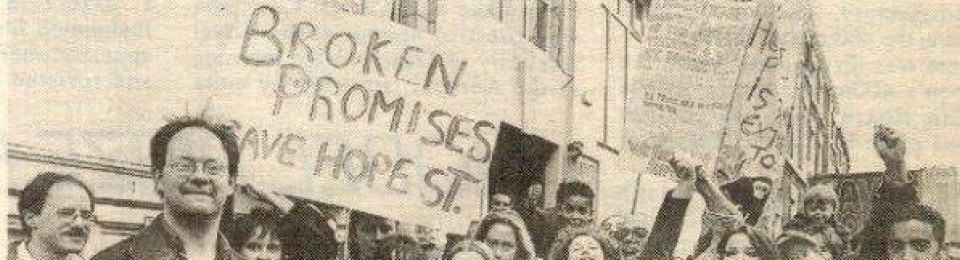
“Take the fucking money! Why don’t you take the fucking money?” The Chairman of the Liverpool Everyman Theatre had me with my back to the wall in the little kitchenette attached to the theatre’s most prestigious rehearsal room, The Red Room. He was clearly irked and my unwillingness to accept some kind of pay off from him, as his role as Chairman of the Theatre, to me, in my role as Director of the Hope Street Project, was irking him even further.

I continued to decline his pay off as politely as I could but can’t remember who left the kitchenette first or what happened immediately afterwards although I knew I had to get back to our rehearsals of Carmina Burana; a multimedia production we had devised with musicians from the Royal Liverpool Philharmonic Orchestra and video support from MITES (which was later to become FACT) and which was due to be performed in the Theatre in just a few days time.

The payment in question was a large sum of cash which the theatre had received from its backers – most notably the European Union in the form of European Social Funds – which were to be used for various training programmes which the Everyman had established through its training wing, the Hope Street Project.  Or more accurately – which the Hope St Project had established and which the Everyman Theatre occasionally looked at with various degrees of affection, bewilderment or hostility, depending on where you sat within the organisational heirarchy.

The payment being offered to me was an enticement which amounted to: “Take the fucking money, stick it in your organisation, and then take your fucking organisation off our backs so that we can run the theatre like we did in the good old days.”  

The Chairman was clearly rattled and he had good cause to be.  The Everyman had been suffering financially for many years, not least because of falling public sector involvement, falling audiences and artistic policies which weren’t cutting the mustard any longer. Then, in 1988, the City Council and the Theatre’s Administrator came up with a scheme to end all schemes.  They identified a vast pot of national regeneration money, coupled it to an equally large pot of European money and turned it into a training programme which the Everyman  – or indeed any other regional theatres – had never seen in living memory.

The programme – the Hope Street Project – was soon causing ructions both in and out of the theatre and posing lots of difficult questions to its staff, audiences, Board members, politicians and funders.  What was to be done with this funding?  How could the Everyman manage what amounted to a 100% increase in turnover literally overnight?  And most crucially – what did it now mean to be a regional producing theatre?

The last question was particularly potent and exercised many of us over many hours tortuous debate not only in the Red Room but in every nook and cranny of the building and its hidey hole of last resort – The Bistro.  To some, the concept of The Everyman was that it was a fantastic little bar (The Bistro) which had a theatre attached to it; rather than a fantastic little theatre which had a bar attached to it but that’s another story.

The questioning went on for years and left everyone exhausted by the time the theatre was close to finally falling on its knees due to yet another round of funding cuts and falling audiences.  The Chairman’s view was that the fault of this malaise was completely down to the Hope Street Project causing everyone to take their eye of the collective artistic ball which led, in his words, to a theatre ‘for social engineering’ – something he was adamant in the press that he didn’t want.

So his proposal was simple: ‘take the fucking money and get off our backs and let us get on with saving and running this theatre’.

Unfortunately for him, the proposal didn’t stack up and it wasn’t long after that the Theatre went into receivership, the Hope Street staff and trainees were all made redundant and a knight in white armour (in the form of the union, MSF) came galloping over the hill to save the Hope St. Project and rescue its EU funding from the jaws of an untimely and unpleasant liquidation.

Whether the bureaucrats had any idea of how EU funding was transforming (wrecking or saving – take your pick) regional British Theatre in the late 1980s is anyone’s guess.  But I do know that without it, Hope St would never had started; the ground work for LIPA would never have started and the cultural vibrancy of one of the UK’s great cities would have taken a severe beating.  One thing we can be certain of: without EU funding, the City’s European City of Culture would have stalled down in the Bistro years before, along with countless other plans for cultural urban regeneration in the city.

‘It’s not me, Peter,” I should have said to the Chairman when I left the Red Room to go back to the rehearsal. “It’s you.”


Coming Closer to Home: the Prospect of the UK becoming a EU free zone.

So, we’re under starters orders; and we’re off.

The rumours are starting to circulate already at work. If we opt for Brexit, there’s a possibility that the very large EU contract we are about to have signed off by DCLG may be delayed until after the referendum. Meaning not only that over 350 creative and cultural businesses miss out on much needed business support to help them deal with the ravages of the public sector cuts of the last five years; but also, closer to home, a small group of staff are suddenly faced with potential cut backs and downsizing until such time that the contract is signed. The safety afforded by what looked like regular funding is suddenly looking very fragile. Childcare is reconsidered, holidays put on hold and we try to remember if we have any premium bonds locked up under the bed.

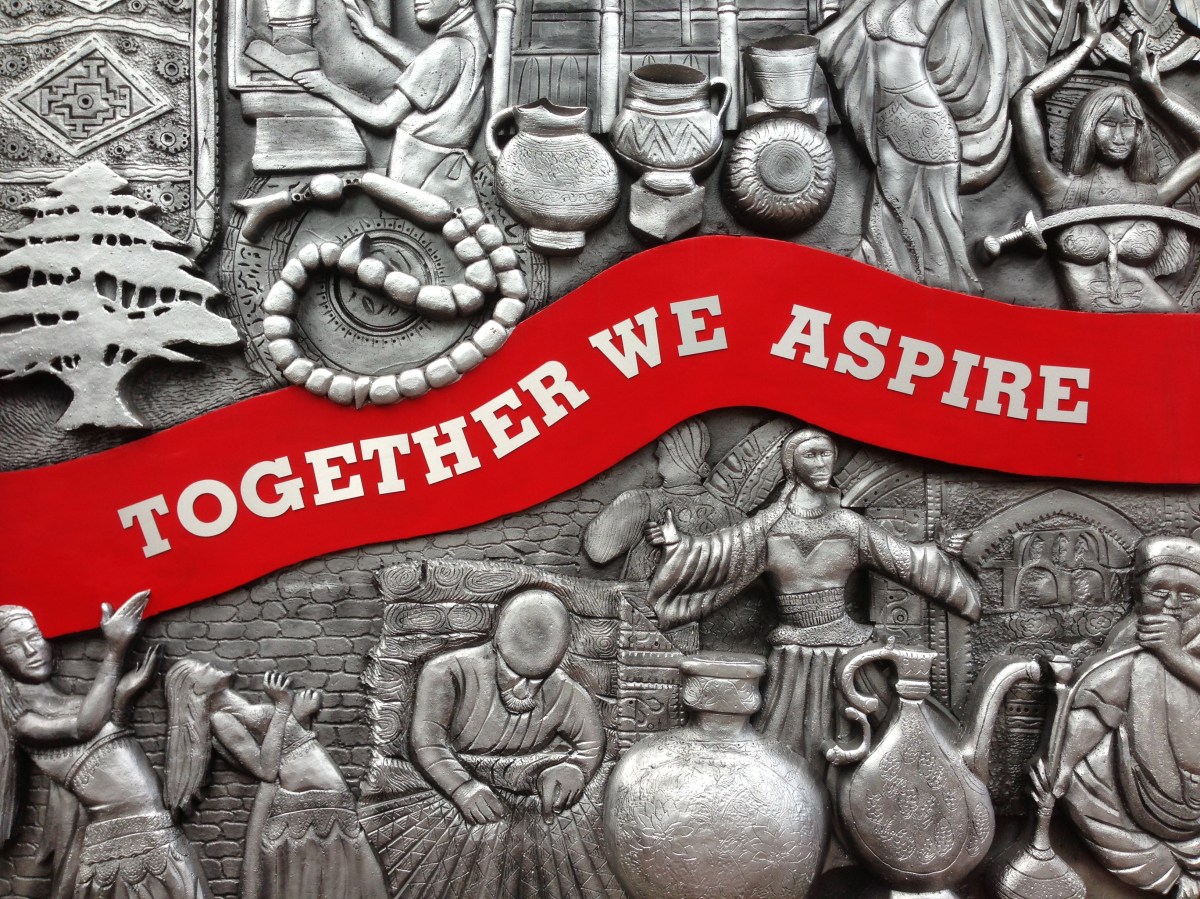
It’s at times like this that you realise the impact that the EU has had on the cultural sector in the UK. I worked in Liverpool for over 25 years and there wasn’t one day in that period that hadn’t benefited in one way or another from EU support. Whether this was at the Everyman Theatre in the late 1980s when the EU propped up that ailing theatre for a good 5 years (although you’d be hard pressed to find anybody in that organisation who would admit it); or at LIPA, when McCartney’s modest financial contribution to firing up the Mothership had the galvanising effect of attracting container loads of ERDF funding in through the gates; or at Aspire when EU funding in the shape of Comenius, Grundtvig or Youth in Action grants had a powerful impact on the working lives of teachers, students, families and everyone in between: the fact is that EU support has been a major source for economic, social and cultural good in Liverpool, across Merseyside and indeed the world as a whole.

And closer to home, it helped shape careers, livelihoods and families. Whilst many were leaving Liverpool in the 1980s to find work, me and many others were able to gravitate to the city precisely because of the job and training opportunities European funding generated.

There are so many stories that EU support has afforded the cultural and creative industries in Liverpool and beyond, I’ll never be able to capture them all here. But I’ll try to capture as many as I can because right now we are faced with the possibility that the respite that funding has provided in the last 30 years could now be sucked out of the sector irreversibly: and the opportunities it provided for the young people, its creative and cultural movers and shapers – and most importantly, it’s communities – could be lost for at least the next generation.

So: over the next few months this blog is going to try and remember the impact that EU support has had on us working in the arts and culture – not just in Liverpool but further afield.

One thing we do know is that working in the arts involves dropping a lot of stones in lots of ponds and that the resonances of our work are felt well beyond the streets, studios and workshops of struggling artists trying to come to terms with their practice in some quiet city back street. One thing we learnt is that EU support makes us citizens of the world, not just our local neighbourhood, country or continent. It makes coming ‘closer to home’ a much more expansive act than just acting out down our streets to a global, TV audience.

If you have any stories to share it would be great to hear and share them. If we don’t, come Brexit, it may well be too late to remind ourselves later on.

Crazy old Trot! (with thanks to Monty Python)

Jeremy: I wanted to be… a Crazy Old Trot!

Leaping from sect to sect, as they float through the mighty rivers of the British Labour Party… The Giant International Socialist. The SDP. The Far Right! The mighty SNP! The lofty flowering Communists! The plucky little SWP! The limping soft Tory of Aldershot! The Maidenhead Weeping Wets! The flatulent Blairite of Sedgefield! The Quercus Maximus Millibandus Edwardus!

With my best buddy by my side, we’d sing! Sing! Sing!

[singing]
I’m a Crazy Trot, and I’m okay.
I sleep all night and I plot all day.

BLAIRITES:
He’s a Crazy Trot, and he’s okay.
He sleeps all night and he plots all day.

JEREMY:
I cut down Tories. I eat my lunch.
I go to the lavatory.
On Wednesdays I go shoppin’
And have buttered scones for tea.

BLAIRITES:
He cuts down Tories. He eats his lunch.
He goes to the lavatory.
On Wednesdays he goes shopping
And has buttered scones for tea.
He’s a crazy Trot, and he’s okay.
He sleeps all night and he plots all day.

JEREMY:
I cut down Tories. I skip and jump.
I like to press wild flowers.
I put on women’s clothing
And hang around in bars.

BLAIRITES:
He cuts down Tories. He skips and jumps.
He likes to press wild flowers.
He puts on women’s clothing
And hangs around in bars?!
He’s a lumberjack, and he’s okay.
He sleeps all night and he plots all day.

JEREMY:
I cut down Tories. I wear high heels,
Suspendies, and a bra.
I wish I’d been a girlie,
Just like my dear Papa.

MOUNTIES:
He cuts down trees. He wears high heels,
Suspendies, and a bra
He wishes he’d been a girlie
Just like his dear papa.

[singing]
He’s a crazy old Trot, and he’s okay.
He sleeps all night and he plots all day.
He’s a Crazy Old Trot, and he’s okaaaaay.
He sleeps all night and he plots all day.

Does your firm own your arse?

It’s holiday time again and stories abound of friends flying around with agendas of lands to be visited, food to be eaten and locals to be gawked at.

Except that in these days of austerity, zero hours contracts and presenteeist-induced guilt, friends the length of the land are foregoing their holidays for the sake of finishing the unfinished job, securing the unsecured contract and completing the as yet incomplete project.

 ‘Just stay at work for a few more days‘ their firms are urging them; or even, ‘take that laptop on holiday with you’ or better still ‘look, forget the holiday. Just stay put. What do you wanna go travelling for in any case? When you’ve got everything you need on our doorstep?’

Guilt-tripped  friends are now either moving their holidays, not taking them or just ignoring them for the sake of keeping their employer off their necks and to save their jobs and reputations.

If you’re in one of those firms that think it owns your arse, just remember the terms of your contract. Assuming you have one. Remember what trade unions fought long and hard for over the centuries. Assuming you belong to one.  And remember the only person who owns your arse is you and make sure you take it with you on that well overdue holiday, fearlessly.

Tips for Travellers: the first time I ever…

… walked along the new platform which connects the Nottingham tram to the railway station was the moment I realised that there are new things we could be doing and seeing every day. Not as a form of magnificent gesture, or in a transformative life changing impactful kind of way but in a small, momentary insignificant kind of way which might generate bigger changes somewhere up the butterfly cause and effect food chain of chaos and unpredictability.

The Walk along the platform opened up some small, momentary insights into how the trains entered and left the station, how St Mary’s Church is profiled against the broader sky scape and how impressive the new bridge is that supports the new tram tracks which point to a new future of travel down south, giving more passengers the opportunity for new views of the city and its byways and highways.

Are our days any better for the microscopic experience of new viewing and walking moments? I think they are if they mean we can see life from a marginally different position. We don’t have to walk a mile in someone else’s shoes – just a few steps in our own in a different direction to get a different view on how our lives might be different.

Tips for Travellers: Waverley Hotel, Workington

Hot spots, cold spots and soft spots.

What many hotel managements don’t get these days is that along with the 17 different types of eggs you can choose for your breakfast, what the travelling business person or giraffe needs from a hotel is a functioning, reliable, uncontested and free wifi as part of the package. It’s no longer good enough to pretend to have a network in your hotel if all you can see is the room next door and no access to the wider world, known these days dear hotelier, as The Internet.

For those hoteliers who are unaware of this amazing invention, the Internet is the phenomenon a lot of people rely on to get on with their daily jobs of earning a living, socialising, catching up with the news and pretty much everything else the lone traveller is inclined to need. These days, dear hotelier, a connection to the Internet is as vital as running water in the shower. And that means water running at the right temperature out of the right tap. We don’t mind too much those rooms whose mattresses have clearly supported heavier bodies in earlier days or whistling showers or those that rhythmically clunk their way into action, as long as there is finally action which you can rely on for the time it takes you to complete your ablutions. Much the same can be said of the need for the functioning wifi connection.

These days, dear hotelier, a functioning wifi is an essential, not a nice-to-have. The Waverley Hotel in Workington would be a sweet spot of restful accommodation and business functionality were it not for the constant searching for the hotspots of wifi connection, functioning bathroom taps and mattresses that don’t throw up their springs in horror every time you have to adjust your sleeping position.

The staff are cheery, friendly and helpful; the breakfast plentiful and fresh; the bedroom spacious enough and perfectly adequate for the odd night’s stay. But if, dear Hotelier, you want to welcome visitors for a second, third or fourth time, you need to invest in this hotel by stabilising its hot spots, doing away with its cold spots and radically overhauling its soft spots.

Tips for Travellers: Panna Kitchen and Canteen, Liverpool

Dreaming of musical reunions at the dreamy PANNA café.

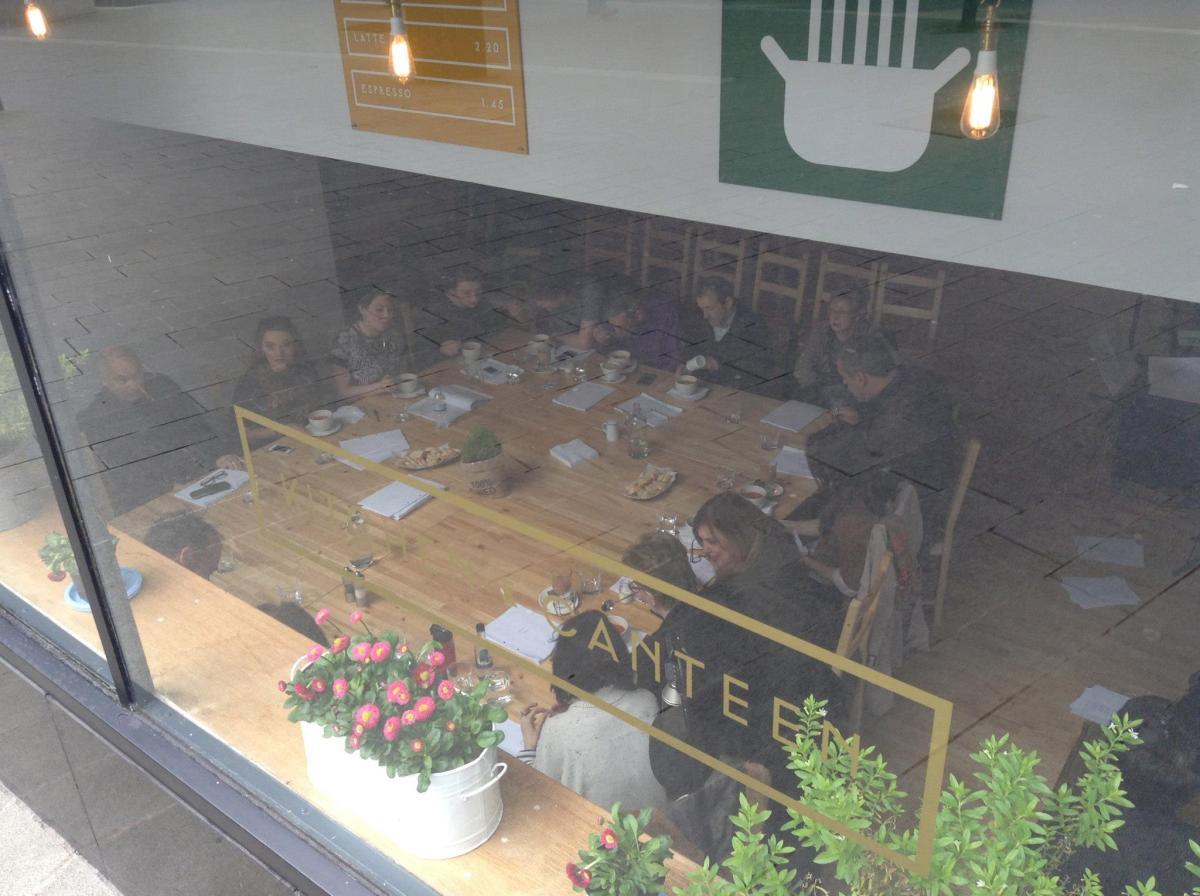
PANNA Kitchen and Canteen is a chic café on Tithebarn Street in Liverpool. The kind of place where you might meet aspirational, visionary and sparky musicians of the future, it was setup by Slovakian business partners Peter and Ivana, and offers a refreshing relief to the myriad of chain coffee shops which populate the Liverpool commercial district. It was a new business start just a couple of years ago so it’s a real joy to see how a business which was just a business plan then has come to fruition.

The food is fresh, based on artisanal baguettes and salads, continental pastries and a unique in-house coffee blend which doesn’t leave you feeling wired after a couple of cups. The continental feel is tangible everywhere you look or sit – from the cool graphics, to the furniture to the whitewashed walls – you could be in Berlin, Bratislava or Vienna.

It’s crying out for a pop in lunch visit by by David Bowie, Brian Eno and Robert Fripp – 3 of the UK’s most influential musicians and artists. They haven’t collaborated properly together since Bowie’c iconic Heroes album in the late 70s (and I don’t count Lodger as it wasn’t a brilliant album) so that dream lunchtime date would be bound to rekindle their experimental and pioneering spirit in the best European tradition. PANNA would be a perfect venue for that rekindling, especially over their coffee and continental pastries.