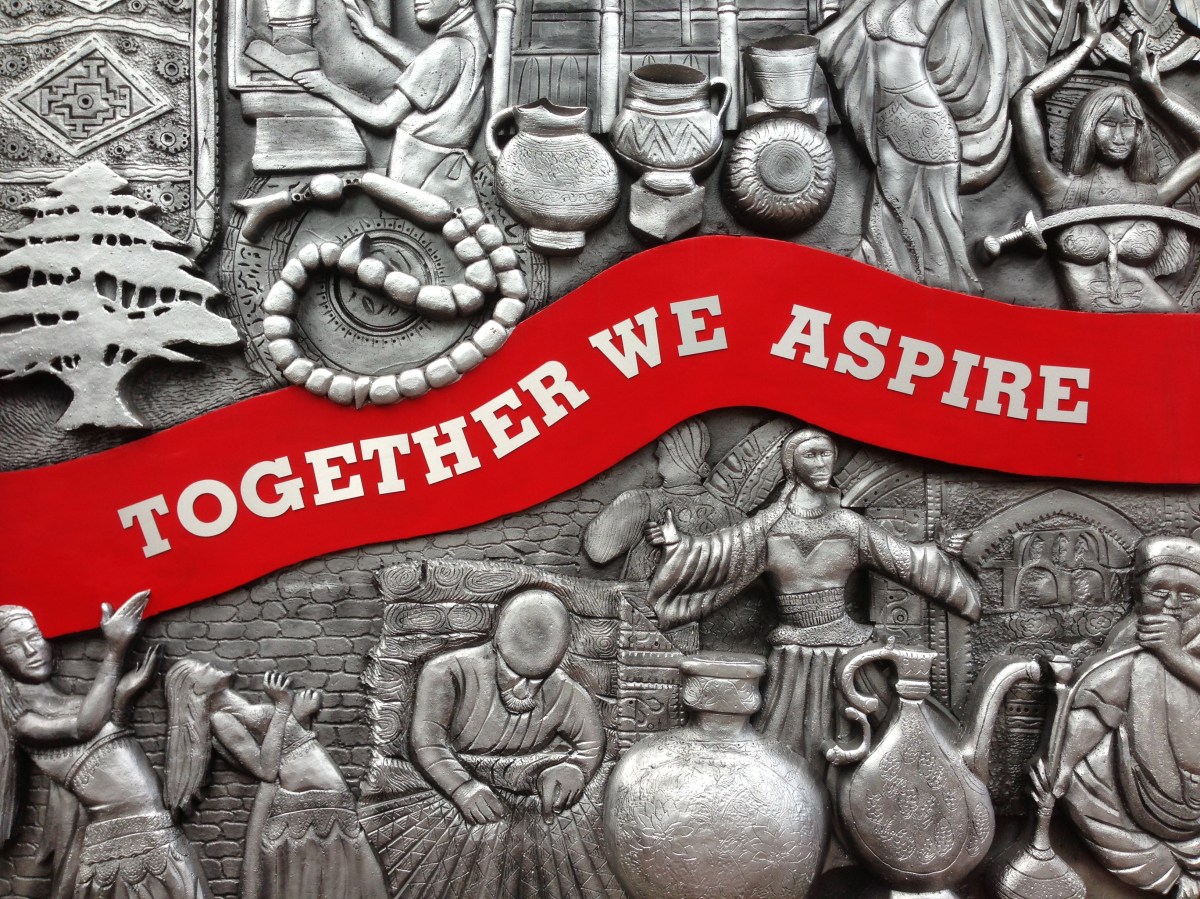
Coming Closer to Home: the Prospect of the UK becoming a EU free zone.

So, we’re under starters orders; and we’re off.

The rumours are starting to circulate already at work. If we opt for Brexit, there’s a possibility that the very large EU contract we are about to have signed off by DCLG may be delayed until after the referendum. Meaning not only that over 350 creative and cultural businesses miss out on much needed business support to help them deal with the ravages of the public sector cuts of the last five years; but also, closer to home, a small group of staff are suddenly faced with potential cut backs and downsizing until such time that the contract is signed. The safety afforded by what looked like regular funding is suddenly looking very fragile. Childcare is reconsidered, holidays put on hold and we try to remember if we have any premium bonds locked up under the bed.

It’s at times like this that you realise the impact that the EU has had on the cultural sector in the UK. I worked in Liverpool for over 25 years and there wasn’t one day in that period that hadn’t benefited in one way or another from EU support. Whether this was at the Everyman Theatre in the late 1980s when the EU propped up that ailing theatre for a good 5 years (although you’d be hard pressed to find anybody in that organisation who would admit it); or at LIPA, when McCartney’s modest financial contribution to firing up the Mothership had the galvanising effect of attracting container loads of ERDF funding in through the gates; or at Aspire when EU funding in the shape of Comenius, Grundtvig or Youth in Action grants had a powerful impact on the working lives of teachers, students, families and everyone in between: the fact is that EU support has been a major source for economic, social and cultural good in Liverpool, across Merseyside and indeed the world as a whole.

And closer to home, it helped shape careers, livelihoods and families. Whilst many were leaving Liverpool in the 1980s to find work, me and many others were able to gravitate to the city precisely because of the job and training opportunities European funding generated.

There are so many stories that EU support has afforded the cultural and creative industries in Liverpool and beyond, I’ll never be able to capture them all here. But I’ll try to capture as many as I can because right now we are faced with the possibility that the respite that funding has provided in the last 30 years could now be sucked out of the sector irreversibly: and the opportunities it provided for the young people, its creative and cultural movers and shapers – and most importantly, it’s communities – could be lost for at least the next generation.

So: over the next few months this blog is going to try and remember the impact that EU support has had on us working in the arts and culture – not just in Liverpool but further afield.

One thing we do know is that working in the arts involves dropping a lot of stones in lots of ponds and that the resonances of our work are felt well beyond the streets, studios and workshops of struggling artists trying to come to terms with their practice in some quiet city back street. One thing we learnt is that EU support makes us citizens of the world, not just our local neighbourhood, country or continent. It makes coming ‘closer to home’ a much more expansive act than just acting out down our streets to a global, TV audience.

If you have any stories to share it would be great to hear and share them. If we don’t, come Brexit, it may well be too late to remind ourselves later on.

First disruptive steps in South Africa.

I first visited South Africa in 1999 when I was working at LIPA and Lee Higgins, our community music tutor at the time, had been involved with various ISME activities and had come back enthused about what he had seen and heard and made a very persuasive case about why LIPA should be out there and how it might be a great source of potential undergraduates for our course in our august institution.

Whilst LIPA released some funding to pay for a market research trip for the two of us, we realised very quickly that asking potential students to pay what in some peoples case would have been the equivalent of a life times earnings to study for a three year degree programme was a form of optimism which bordered on the deluded. Of course, there would have been some students whose parents could have paid – but they almost certainly weren’t going to be from the black families who lived in the townships of Cape Town that we visited. And sure – we could dream about sponsorship of talented black musicians by benign white multinationals all we liked – but the fact is that going on a student recruitment drive to South Africa in the late 1990s was a potentially ridiculous mix of idealism, naïveté and market forces.

What wasn’t ridiculous though was what we did find. We went looking for students and sources of institutional income and instead found people and places and sights and sounds and colours and textures and atmospheres and politics and religions and a place on earth which was simultaneously heaven and hell and which blew apart our preconceptions of notions of community, of music, of Black and White and of good and evil.

Mandela of course infused the air we breathed, the ground we walked on, the talks we talked and the music we listened to. We saw, heard and felt Isicathamiya; we heard Xhosa and Zulu, we wondered why there had never been a civil war in South Africa and we were astounded. In fact, there wasn’t one single day when we weren’t astounded by something or another.

That first visit led to several future visits which became less about attracting the South African Rand to the coffers of LIPA, and more about wider educational and cultural exchange between artists and teachers but the astonishment we felt during that first visit continued to dance around our footsteps as we met many inspirational people whose lives were also infused by Mandela’s presence – or absence, given the amount of time he had been incarcerated on Robben Island.

I don’t really want to say RIP Nelson Mandela as there are millions more saying that right now much more authentically from places that can still astound. His death not only opens up other ways of being astounded by the stories of South Africa: but also how we live our own lives in places which may be thousands of miles from Cape Town but which may as well be on Mandela’s doorstep given the racism, bigotry, fear and ignorance which are still evident everywhere you look and tread.

So I hope his family and people find some peace once he has been laid to rest; but for the rest of us, Insha’Allah, we could do a lot worse than to allow ourselves to be constantly astounded at the world we continue to live in and infuse some of his spirit into disrupting those worlds.

Paddy Masefield: still sending out shock waves and unsettling foundations

It’s been a hectic few months what with Treasured at the Cathedral, the Serbian and Macedonian visit, the business start up work at Liverpool Vision and the myriad of other activities we are musing about, thinking of and trying to lay the foundations for. Paddy’s commemoration means that I can get away for a few days and think about all that fragmentation and stresses and strains in an environment which is a little quieter and offers the opportunity to reassess exactly what it is we want from the world ahead.

This was Paddy’s legacy for me. Working with him both at LIPA and within Aspire during times of organisational growth and stress and challenge meant that you had to step back from the common place, the usual, the humdrum, and completely reassess what we were doing, how we were doing it, and why we doing it at all.

His work with us at LIPA on establishing Solid Foundations sent powerful shock waves through the organisation, challenging established ways of thinking about disability, ability, arts training, arts development and who had a right in the first place to stand on stage and command attention.

His work meant we had to rethink everything about the student experience; how they got into HE, what he meant by accredited prior learning, the integrated curriculum and student progression. This of course had a direct impact on the students who joined solid foundations – but it’s impact and his influence were more wide ranging.

It meant that students on the so called mainstream programmes had to address their own concepts of identity, of ability and what was being asked of them when it came to not only developing and devising new work, but what it meant to rethink traditional ways of acting, of music making, and of dance for example. It meant that staff had to rethink how impairment might inform the student assessment process for example and whether there were other insights that disabled staff could bring to the process that couldn’t be accessed by their nondisabled counterparts. Far from providing solid foundations, Paddy was instrumental in rocking the very foundations which we thought held up conservatoire arts training in the UK.

Paddy’s influence was felt by many students and staff, although many may not have met him in their times at LIPA. Many of them are still working and have gone onto great things, Mark Rowlands, Mandy Redvers Rowe and Jaye Wilson Bowe to name just a few. I’d like to thank you Paddy for giving me that space to rethink, to replay and regalvanise. Your shock waves are still rocking our foundations to this day.

Testimonial for Paddy Masefield, 20 October 2012
Battersea Arts Centre, London

Imagining Chris Thompson: an original Geordie mother of invention

Chris Thompson was a Community Arts graduate from LIPA who died 5 years ago this week: but some images of Chris which have stayed with me over the last 15: images which suggest a powerful, creative, expressive artist who didn’t pay much attention to the rules, who didn’t know when to stop – but who did  know intuitively and compulsively how to capture, thrill and entertain an audience.

Watching Chris in rehearsal or on stage, you always had the sense that he was about to take you on a roller coaster of theatrical  thrills and spills – he’d tear off your safety harness, lock you into the front seat – and then, like a figurehead at the bow of a ship, perform to blazes, completely fearless in his imagination and shameless in his performance.

As a 1st year student wielding a large kitchen knife borrowed from the LIPA canteen one Friday afternoon;  as an actor pleasuring himself in the window of the college library during performances of The Tin Drum; and as film actor in My Life as an American, Chris’s muse and inspiration – Frank Zappa – was always close to hand – and we, his audience, were privileged to see our very own extreme Geordie artist in action: and we will miss that energy, imagination and vivacity. As Zappa said in the International Times in 1970 once he’d dissolved the band which took him to international prominence – and as Zappa might have said of Chris himself: The Mothers of Invention, infamous & repulsive rocking teen combo, is not doing concerts any more. Frank – you’re in good company with Mr. Thompson – make sure he’s still riding that roller coaster when we join you both and when it’s our time to leave the funfair.