Guest Blog for Creative Nottingham: Urban magic on your doorstep.

It’s a Friday lunchtime in the office and the weekend beckons, despite the temperatures not shifting much beyond minus 73 degrees C. An email pings through the letter box and your first impulse is to press the delete button as fast as you can to prevent you from being drawn into another circular route of endless hyperlinks, cross references and doubling back on yourself.

But this time you don’t delete it but read it. Why? I don’t know but that may not be the right question right now. It’s about a venture called Street Wisdom who describe themselves as a “new, non-profit venture that offers an enjoyable, powerful and free way of using the streets to learn something new. “ That sounds intriguing.

“There is no charge” the email continues. Even better methinks.

At Street Wisdom you don’t pay fees, you pay attention.” OK. I think I can just about manage that on a Friday afternoon.

“All you need is to turn up with a question you’d like some fresh answers to. It could be a business-related question, a personal one. Or both.” OK… now hang on, there are enough questions racing around my head at the moment to fill a race track, I wouldn’t know which one to back to getting the fastest answer.

“Come by yourself, tell your friends to sign up or even enrol your whole team – this is a great way for business colleagues to hit the refresh button.” Well, being one who always like to hit the refresh button (most frequently in the Cross Keys in the Lace Market, it has to be said) I decide to take the plunge and join the venture and their promise of Street Wisdom on the steps at the front of Nottingham’s town hall in the Old Market Square.

Pretty soon afterwards, we’ve met one of their Street Leaders who registers me up for the process and we join a group of four other intrepid searchers for the street wisdom.

They’re as good as their word: all you need to bring with you is a question that you’d like some fresh answers to. You can keep it secret if you want, but it’s good to have something in mind. Nothing as big as ‘when am I going to win the Lottery?’ or as small as ‘left or right lion?’ – but something that matters to you, right here, right now.

So what happens next? That’s not a bad question. Our Street Leaders got us started by helping us ‘tune into’ the street over four shorts walks: each walk we could make alone or with friends, and each walk had an instruction to guide you:

“Look for what you’re drawn to”
“Slow right down.”
“Notice the patterns.”
“See the beauty in everything.”

Now, in the cold light of day after the venture, this might seem a particularly uninspiring set of tasks to undertake: but in the increasingly warm light of the Nottingham afternoon, the walks and the focus given by the instructions generated for all of us on the walks a quite astounding set of responses.

I found myself being drawn to the fountains on the other side of the square, feeling quite wistful about the lack of water features in the city and the distance we were from the coastline.

The instruction to Slow Right Down had me stopped dead still in my tracks for over fifteen minutes which enabled me to see how fast everyone rushes around the city: always with intent and a job to do or a place to go or a person to visit. Staying much longer under this instruction would have seen me draining away through the concrete, I was relaxing that rapidly.

It was on the third walk – Notice the Patterns – that I really started to feel the effects of the process. Normally I brush off patterns or pay no attention to them at all: but given 10 minutes just to look at them made me hugely aware of just how patterned and ordered our city scape is: it was intoxicating to see patterns in every nook and cranny and in every small piece of iron railing, shop window and bus stop. Had this been after a Friday evening at the Cross Keys, one might have explained this with 15 pints of IPA: but no, this was Friday lunchtime and I was still technically at work.

The fourth walk – See the Beauty in everything – was the peak of the afternoon. It meant that it was impossible to go anywhere with stopping to marvel at everything. I found myself marvelling at all of modern technology when I overheard a couple of tourists extol loudly the wonder that was Skype, which had allowed them to talk to a long lost aunt in Australia that very morning.

After the four short walks, you’re encouraged to go off on a journey by yourself: your own street quest.   You do this with your own question at the back of your mind and later on meet up with the rest of the group to share your experiences and improved wisdom. I can’t tell you whether the question I had posed was answered other than to say that your first question may not be the right question; but I can tell you that all six of us were swept away by the experience and promised to go divining for more Nottingham in the weeks to come.

“It’s urban magic on your doorstep” says the email and for once in your life, the reality lives up to the promise.

More on Street Wisdom here.

And more on Creative Nottingham here.
Give Us This Day: a Toast to Earnse Bay, Barrow in Furness.

Heaven on Earth? Not quite but not far off.

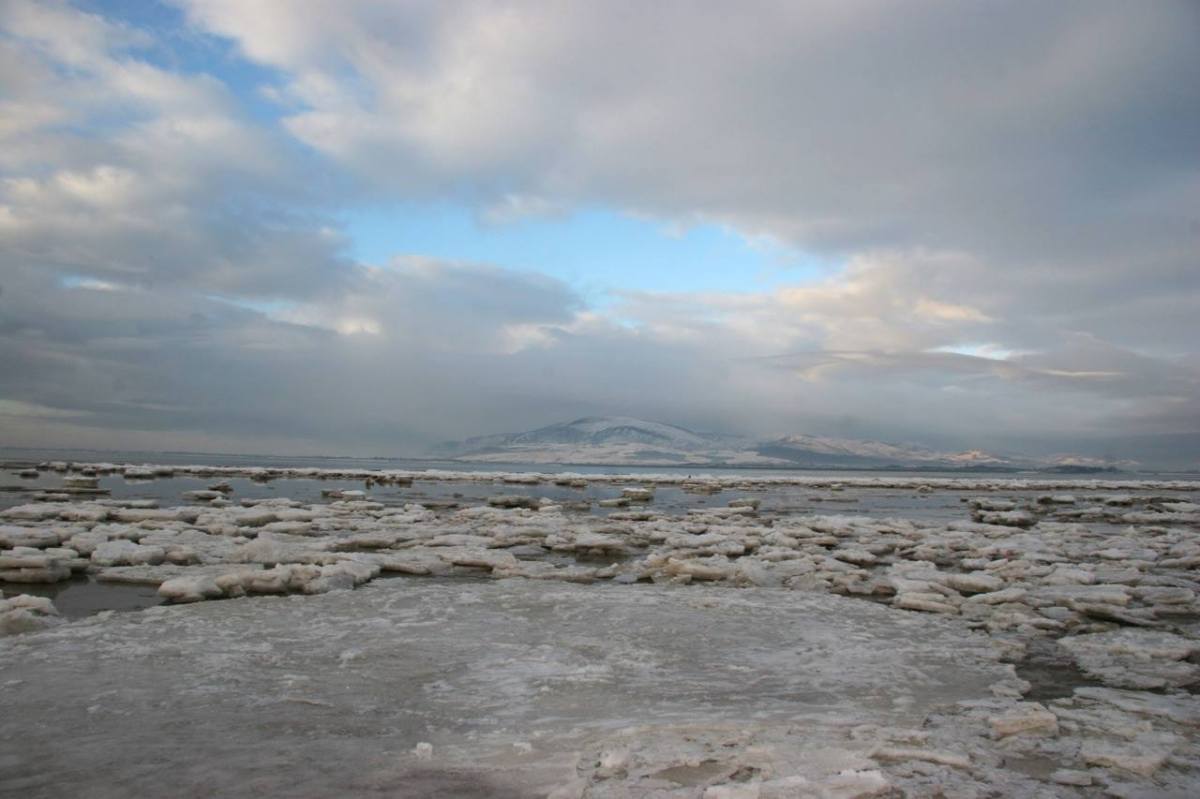
It’s a well kept secret in Barrow in Furness that Earnse Bay is not much short of heaven on earth. True, there are no angelic choirs, divine instructions from on high or bars which are open 24/7, but what it lacks for heavenly stereotypes it makes up for with sea, sky, coastline and windfarms. And the brooding Cumbrian mountains in the not so far off distance.

If you want tropical bathing: forget it. If you want warm, crystalline seas with more life under the surface than above it: forget it. If you want snorkelling, surfing and all the usual seaside paraphernalia of bingo halls, cheap nasty diners and violent games machines; don’t even bother.

But if you want the priceless liberation of wind on surf and stone, stars in the endless firmament and a brief moment of immortality  then Earnse Bay might just be your destination of choice. Just don’t tell anyone else. No-one wants this heaven to become someone else’s hell just yet.

My Lords, Ladies, Gentlemen and Members of the Jury, please raise a toast to Earnse Bay.

Give Us This Day Our Daily Toast: read all about toasting here.

Tips for Travellers: the Royal Hotel, Purfleet, Essex.

The Surprise of London Views without London Prices.

I’m visiting a conference in Essex where the organisers have, in referring delegates to the local corporate hotels, omitted to mention the Royal Hotel in Purfleet which presents itself as a delightful surprise in this part of urban Essex, some 25 minutes by train from the City of London.

It’s a surprise which is generated by its hard working and friendly staff who make you feel welcome the moment you step through the front door: they book you in quickly, organise a taxi for the next morning rapidly and serve a late night meal cheerfully without the usual sense of jobsworth that you often find in the corporates. The surprise is topped off with a glorious view of the River Thames and the City. These are indeed London views but without exorbitant London prices.

However, surprises always come with side effects. In the cold light of the morning, the Royal’s side effects took some of the shine off the night before. The decorative finish of the rooms leaves a lot to be desired in as much my room was decoratively completely unfinished; and a lack of wifi, overlong bedroom curtains, a mattress which feels like it had been liberated from a nearby skip and sticky, unwashed dining tables all gave an impression of a hotel that’s been thrown together at the cheapest possible price.

Whilst the staff continue to be cheerfully and authentically polite and friendly, you get the impression of them struggling against some long term under-investment on the premises. The Royal may well have non-London prices, but at the moment it also suffers from non-London based quality issues.

With a bit more tender loving care, the Royal could live up to its name and surprise everyone, including forgetful conference organisers.

Guest Blog for Creative Nottingham: Left Lion, Right Lion. Confused? That’s the point.

It’s a simple enough mistake to make in Nottingham. You say to a mate with the faux confidence of someone who hasn’t got a clue what they’re talking about, ‘Meet you at the Left Lion’. Something that people have done for generations it seems.

So you turn up at what you think is the Left Lion only to find your mate is conspicuous by his absence. You tap your feet, prowl moodily around the stoic beast for what seems like ages and foam indignantly at the mouth as you create scenarios of being dumped at the last minute for a better offer. You give your Left Lion a kick on the plinth for good measure and head over to Hockley. Very soon – within seconds – you bump into mate who has been prowling around his Left Lion and has also left his indignation on his Left Lion’s plinth. You soon realise that left is a relative concept in Nottingham and what’s your left is his right and vica versa.

You wouldn’t be alone in that regard either. There are generations of mates missed, dates foiled and fates sealed by the misinterpretation of what’s left and what’s right down at Market Square. It all depends on what you’re facing and what’s behind you.

If you’re in the know, you’ll know that the two lions are named after the two Greek brothers Menelaus and Agamemnon who were big roundabout the times of the Trojan War. That neither lion has its name tattooed on its forehead doesn’t help the visitor’s sense of orientation but you’re reminded – via Greek tragedy this time – that if my Menelaus Is your Agamemnon then we’re heading for a big time fall out.

The same is happening across the country right now too: peoples certainties of what’s left and right are being confused by their choice of standpoint. Some strange allegiances are being forged in smoke filled bunkers which are offering all sorts of promises on the future of arts funding after the next election. Brothers are standing alongside or in opposition to each other and the challenge for us is to know which way we’re facing and who’s behind us.

In the weeks to come the arts community is going to be asked to vote for a candidate of their choice who may go out of their way to persuade us of their artistic credentials and assure us that they’re looking in the same direction as us, have the same moral leaning as us and are as vociferously supportive of the arts agenda as the next poet down the street.

There’ll be a lot of time and energy spent in persuading us that their left is our left, that their right is our children’s right to a creative education and that all would be fine in the glory of the garden that is the arts funding system in the country if only we didn’t get so stressed out about what we were looking at and what was behind us as when were looking at it.

So in these times of political rhetoric, just remember Menelaus and Agamemnon and double check that your Left Lion is their Left Lion too. Otherwise we will be facing another era of arts funding savagery when we were promised an era of milk, honey and lions laying down with lambs. There’s only one outcome when a lion lays down with a lamb. One replete smiling lion alongside a bloody mess of bones and lamb kebabed.

More on the Creative Nottingham website here.

Guest Blog for Creative Nottingham: The Price of Everything and the Value of Nothing

I’m at the top of the Nottingham Wheel in a gently swaying gondola. It’s drizzling outside, my Creative Quarter colleagues are happily immersed in a life drawing class and I peer through the gap in the gondola’s windows. A few doors down there’s a clump of puppeteers waving at the passing birds; further ahead a clump of readers studiously survey all around them and continue with their reading of other writers work; and at the foot of the wheel, in what seems a long way down the wrong end of a telescope, the rattle and shake of some Asian Dhol drummers continues to reverberate through the damp morning air and up to the top of the wheel where we are all precariously perched, gently rocking in the rain, waiting for our next move.

It’s the time for Nottingham’s contribution to the BBC Get Creative national campaign and over 150 artists of various shapes and sizes have turned out to support Auntie in a large scale show of solidarity up on the slowly revolving Nottingham Wheel.

It’s a long way down and suddenly there’s a gush of wind heralding a temporary and terrible typhoon which wrecks this peaceful Thursday morning vista. There’s carnage; wrecked metallic structures, artists hanging off the huge metallic spokes held on by nothing more than their braces or bra straps, screeching ambulances, apocalyptic police helicopters and trams sliding to a smooth halt like they always do. Whatever happens in Nottingham City Centre, it seems the trams are destined to run and stop smoothly cleanly and efficiently for ever and ever. With a perpetual self satisfied grin on their shiny faces.

But happily, there was no sudden gush of wind and our gondola remained calm until we were all brought back to earth. We politely stepped off and walked back up through Hockley to work. It was all a figment of my imagination and we could all get on with our day, safe for another few hours at least from the wildest imaginings of a deranged blogger.

Elsewhere on the wheel, other alternative worlds were being plotted or enacted. Have you ever been on a large circus wheel surrounded by over 150 artists of all shapes and sizes? It’s an odd experience in as much you might see a group of actors below enacting out a small horror scene from a recent play: but you can’t help wondering whether they are actors, or whether they’re really a normal Nottingham family out for a morning as part of their half term break.

On another spoke of the wheel, there’s a group of yarn bombers decking the walls of their gondola with wool, crocheted stockings and knitted tea cosies. Pretty soon the gondola has assumed the size and texture of a gigantic woolly sheep. As it slowly floats into the sky you wonder whether this is what it’s meant to indicate: or whether it’s speaking to us of something else entirely different. The dangers of genetic engineering? The benefits of a vegetarian life style? We shall never know unless of course we ask the yarn bombers.

But the main benefit of this morning was not just about promoting the value of the arts to politicians and the wider public just before an election. It highlighted the real power of the arts: the power, however temporary, to see the world through a different set of eyes; to walk in someone else’s footsteps and to gently remind ourselves that there are other ways of seeing, doing and being which add to the quality of our existence.

This is little to do with the arts being good for your health and the country’s wealth; not much to do with the impact of arts on our children’s exam results or a generation’s missing job opportunities and absolutely nothing to do with protecting society from Civil War or saving the NHS (although they may inadvertently contribute to all these things.)

No, the purpose of the arts – if they are to have a purpose – is that they bring us up abruptly on our expectations and assumptions. They make us rethink, react and resonate with the world in which we live.

As it happens, none of these functions can be measured by league tables, changes in crime rates or increases in GDP, although many of us fervently wish they did. The cost of this morning’s event could probably worked out in terms of hours at work lost, the price of lost income from the Nottingham Wheel and maybe even the cost of the petrol it took to get the drummers up from Birmingham.

These are all important things in their own little worlds, but the value of this event – and the beauty and value of the art experience, whether participating, watching, learning or leading – is the reminder that we are not alone in the world. That, as MasterCard used to say, is priceless.

You can learn more about the BBC Get Creative work at Pecha Kucha on Friday 27 February hosted at the Malt Cross, Nottingham.

See more here!

Guest Blog for Creative Nottingham: I’m a newcomer: I know nothing.

“We are the Robin Hood of Europe: we will take your credit cards, your DVDs, your bank details and distribute them to our people.”

These were the welcoming words of a friendly burocrat of the Obrenovac Town Council in Serbia when I met him for the first time in 2009 as part of a trilateral cultural exchange project. I was startled and immediately searched my jacket for my credit cards, spare DVDs and loose bank details. Robin Hood of Europe? How was it that a minor official in a small town south west of Belgrade could draw on a Nottingham archetype when meeting me for the first time when trying to explain his country to me?

His words resonated as my first train from Liverpool to Nottingham trundled slowly through the city’s outskirts and into the long platform at the city station which doubles up as platform 4, 5 and 6 – and probably other numbers in the middle of the night when no-one’s around to look and those long unending freight trains rumble slowly through the station carrying who knows what to who knows what destinations.

I’d not been to Nottingham for many years and this train journey marked the start of another, more substantial new journey for me: moving to a new city to start a new job at the not so tender age of 57. My home town of Liverpool had become an increasingly difficult place to find gainful employment, despite all the post 2008 protestations that it had become a European City of Culture with work opportunities galore.

I’d been working in the arts and creative industries for over 25 years, perversely moving to Liverpool in 1989 from Leeds to find work – when the trend was to move out of the City and find work anywhere but Liverpool. But now, in a kind of wistful symmetry, I was now doing the reverse journey, 25 years later: looking for work away from the City.

One of the first people I met was Kathy McArdle, CEO of the Creative Quarter who was terrifically enthusiastic about the Creative Quarter and Nottingham in general. We spent a few days wandering the City streets and I was sold. After some testing interviews in the City Council and with Board members, Kathy and I shook hands, slapped each other on the back and agreed a starting date.

Within a couple of weeks, I had started work as Development Manager at the Creative Quarter and my first train journey into the city resounded with all sorts of clichés: of Nottingham, of moving town, of starting a new job, of getting on your bike to work. The clichés tumbled along in rhythm with the sound of the train wheels clanking on the track: “Get on your bike, clickety click; give up your past, clickety clack.; Robin Hood, clunkety clunk; Sherwood Forest, crash bang thud.” The train came to a sudden bumping stop and I had arrived.

Nottingham? What did I know about Nottingham? What does anyone know about Nottingham beyond the Robin Hood stereotype that the diminutive Serbian eurocrat had referred to all those years ago? Other than stories of Maid Marion, Friar Tuck and the Sheriff? The beauty of this move would be that I would soon find out about Nottingham’s surprises in the weeks which followed.  I’ve subsequently been invited to write as guest blogger for Creative Nottingham and so that blog will to explore those surprises in the weeks to come, albeit from the position of a newcomer who knows nothing

See more here!

Francis Keith Aitken: A Life of Quiet and Steadfast Influence.

In February 1932 a young architect made a remarkable journey by boat and train from Khartoum, the capital of Sudan, up through Central and Eastern Europe to a large naval port, Stettin, in Pomerania, North Germany.

This journey was taken at a time prior to a period of extraordinary upheaval across the continent: the rise of National Socialism, the onset of the Second World War, the division of Europe, liberation 40 years on of Eastern Europe and the subsequent tragic conflict in the Balkans.

This architect who had, to his evident irritation and discomfort, just been made redundant by the Sudanese Government (on the orders of the British Government) travelled through places whose names and memories are inextricably linked with the tragedy and romance of our century – Constantinople, Belgrade, Budapest, Berlin.  He was armed solely with a pocket camera and passport, which he very nearly lost in Prague.

We should all give thanks to the young Czech train conductor who returned that passport and who allowed that memorable journey to continue. For what was the ultimate purpose of that journey? It was to meet and marry his fiancee, a young ‘Hortnerin’ in Stettin and so step out together on the longer and more demanding journey of a stable and happy marriage which lasted over 61 years.

The international spirit and steadfast nature of Keith and Lotti’s marriage has swept through our four generations of grandparent to great grandchild, in counterpoint to the political upheaval of the age,. And it has been Keith’s quiet and consistent ability of practising a benevolent internationalism which has created his extended family gathered here to day from across the world: from Germany, from Africa, from South America.

And it is this positive and unwavering influence that I would like us to thank him for: his influence which instilled a belief that the world belongs to all of us; that we would do well to tend and care for it; his tolerance which valued all cultures and beliefs and which accepted people as they are: and the proof that the meeting of a young architect from Cardiff with a young Hortnerin from Stettin can provide us all with a beacon of hope and aspiration.

In a world of change and chaos, you  have been constant and your love, quiet and steadfast. We thank you from all our hearts and from across the globe.

As Shakespeare said:

Our revels now are ended. These our actors,
As I foretold you, were all spirits and
Are melted into air, into thin air.
And, like the baseless fabric of this vision,
The cloud capp’d rtowers, the gorgeous palaces,
The solemn temples, the great globe itself
Yea, all which it inherit, shall dissolve
And, like this insubstantial pageant faded
Leave not a wrack behind. We are such stuff
As dreams are made on, and our little life
Is rounded in a sleep.

Testimonial for Francis Keith Aitken, August 1993

Tips for Travellers: The Hot Mango, Ulverston, Cumbria.

Wondering whether we’re bit players in Alice in Wonderland.

As a friend asked on the way in, “what’s the likelihood of getting a hot mango in The Hot Mango?” Sadly, the answer is zero but this doesn’t stop The Hot Mango in Ulverston being a neat little town centre cafe with a menu which contradicts its physical size.

There’s a lot on offer and a huge blackboard to tell you all about it; substantial menus in confident plastic wallets and tables and chairs which are probably marginally too big for the space they are crammed into. But the big promise offered by the substantial menu is confidently delivered, the Big English Breakfast lives up to its name and the sense of living in an out-take of Alice in Wonderland is soon dispelled.

The Hot Mango – like the Cheshire Cat – may not actually exist but the feeling of lunch time satiety is real enough and our lunch time party left the premises feeling satisfied with ourselves and the food and pleased that we managed to avoid knocking over the furniture or falling asleep in outsize teapots.

Tips for Travellers: The King William IV Pub, Sneinton, Nottingham.

A (beer) case of mistaken identities.

The King William IV Public House  -also known as King Billy’s – also known as the Sneinton Snug – also known as Robin Hood’s ‘hood – is a charming atmospheric English pub with a myriad of identities as well as a fine selection of independent micro-ales and nano-beers.

Not only does the discerning drinker need to negotiate previously unheard of types of mead, he or she has to decipher the unattributed poetry in the toilets. Are we reading Becket? Einstein? Blyton? We cannot be too sure given the ambivalence of the atmosphere. Or it may be given the strength of the Jaipur IPA which clocks in at a deceptive 7.4% ABV. And very tasty it is too. Or was that the pork pie?

The pub banter only serves to add to the ambiguity:

“What happens when you mix black rat with white rat?”

You might think that given the hostelry’s proximity to a local biomedical research centre that you are over hearing an after works chat about state of the art genetic engineering practice.

“You get grey rat?”

“No, you get more black rat.  The taste of the black rat over powers the taste of the white rat so all you taste is black rat.”

Genetic engineering? Ale blending? Who knows. No-one seems to worry too much either given the soporific effect of the mixed race rat.

Given the parallel universe that is King Billy’s, it is only when wending our way up the hill back home when we realise that uphill is in fact downhill. At that point we know we have come across a fine local pub, albeit with identity problems.